- Suzuki announces two new models at Eicma
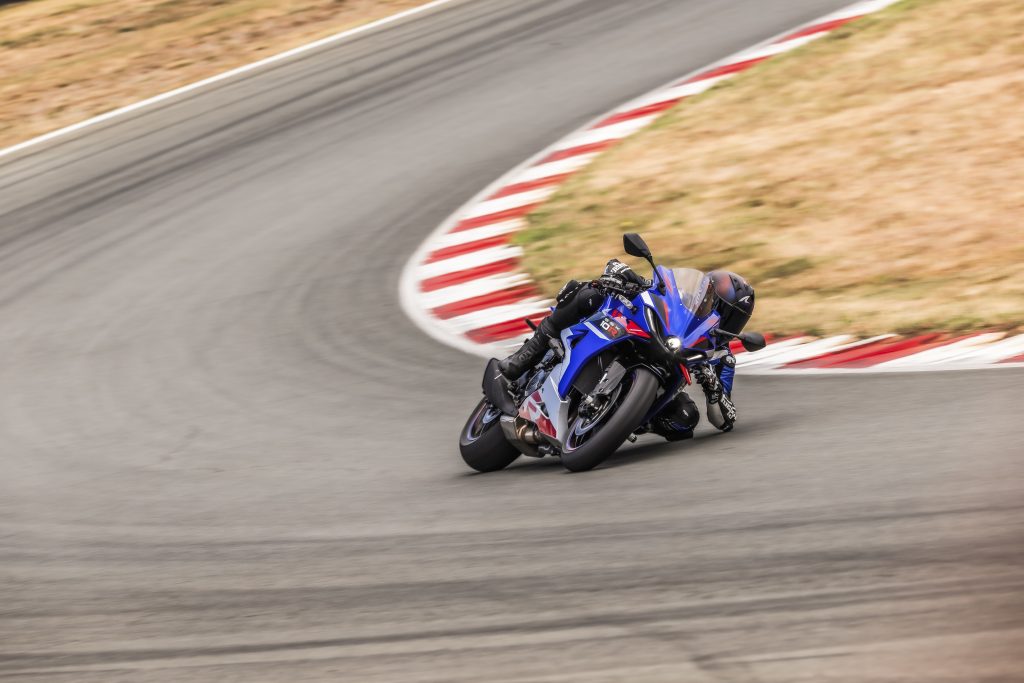
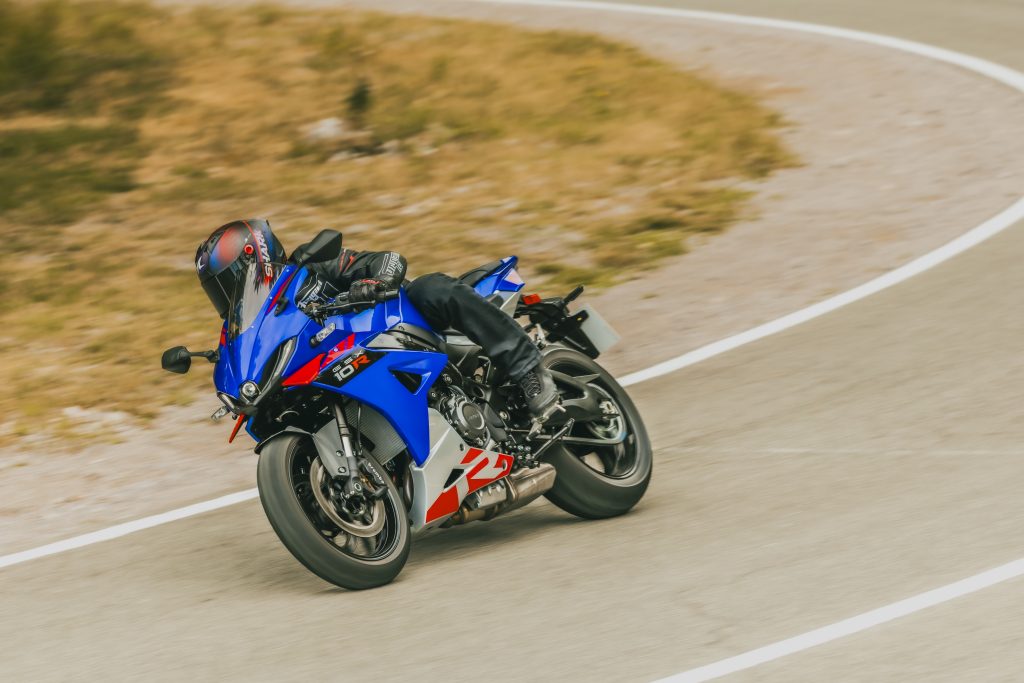
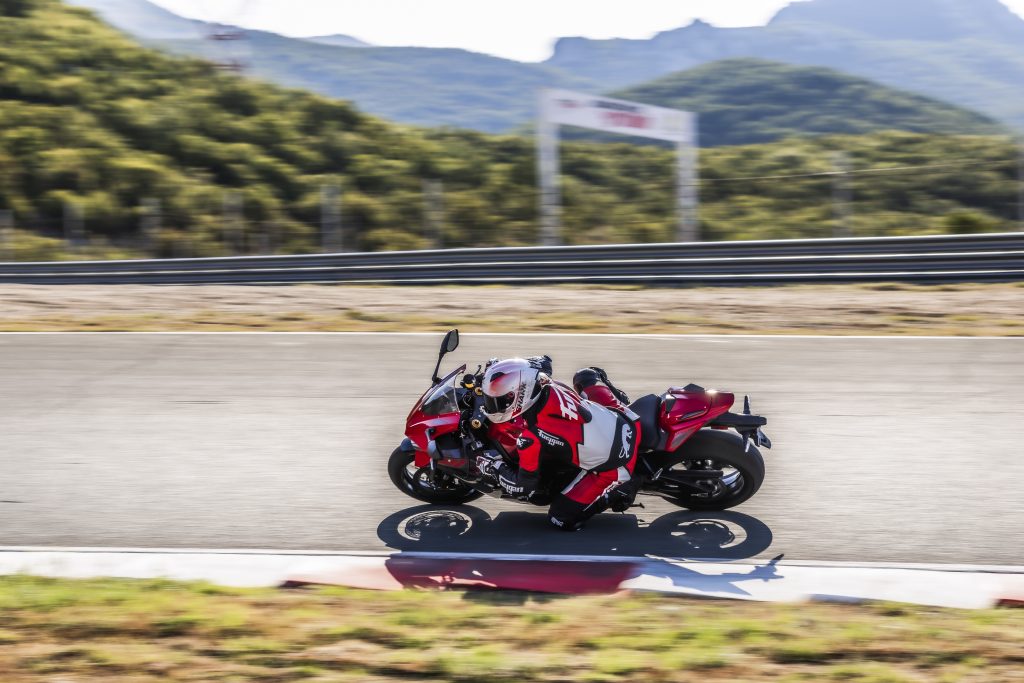
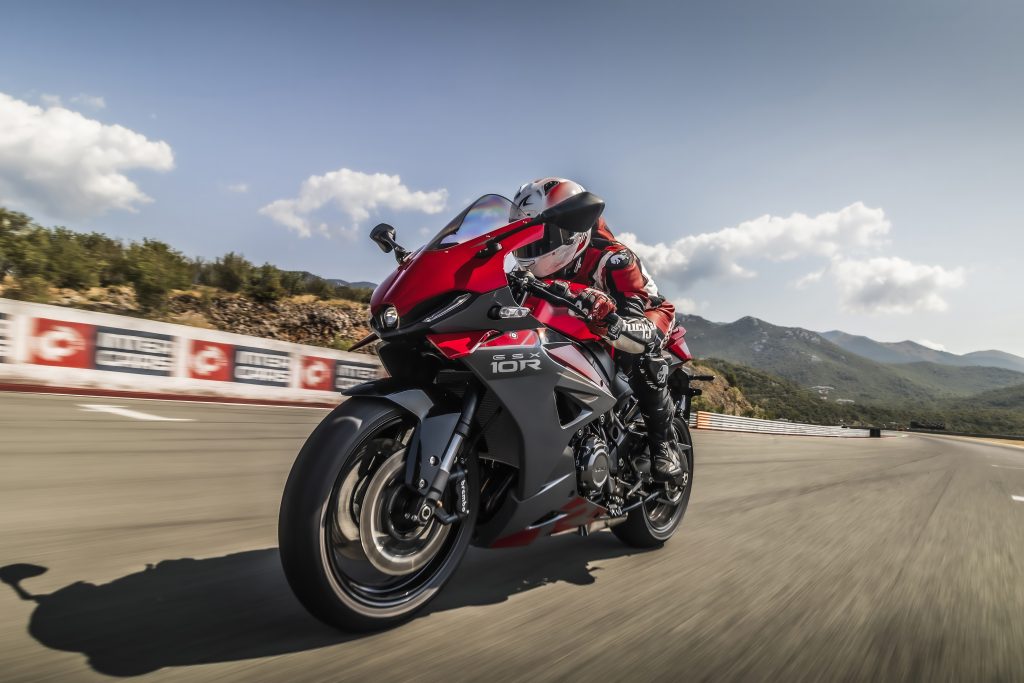
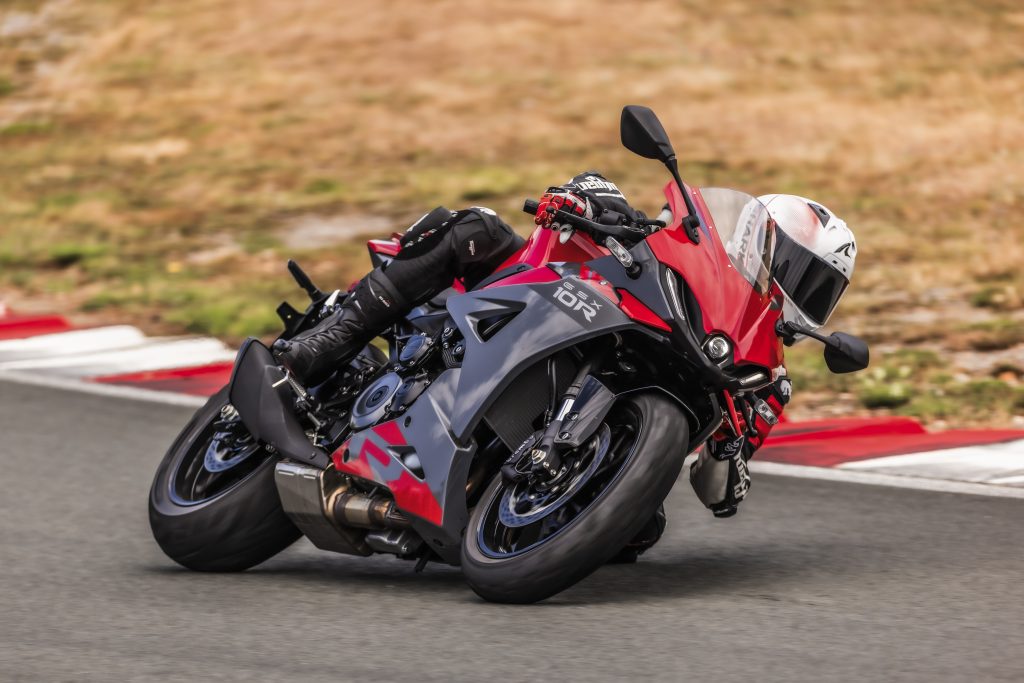
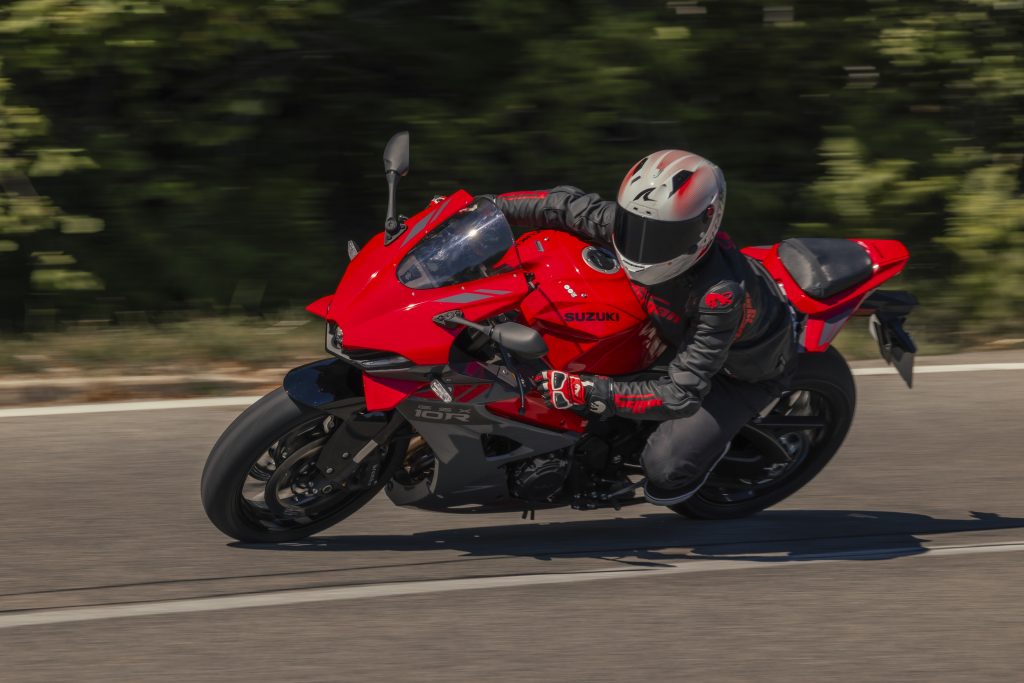
- A new GSX-10R redefines the modern day supersport segment
- Updated version of Suzuki’s 152PS inline four-cylinder engine
- New chassis with modified frame, new swingarm and subframe
- A comprehensive electronics package that includes a six-axis IMU with slide, roll torque, traction, and wheelie control
- The SV-7S continues the legacy of Suzuki’s SV650
- Built in the same image of the original, it is set to provide a new fun, affordable middleweight naked option
- New tech brings it up to date, with power modes, quickshifter, traction control, and smartphone connectivity
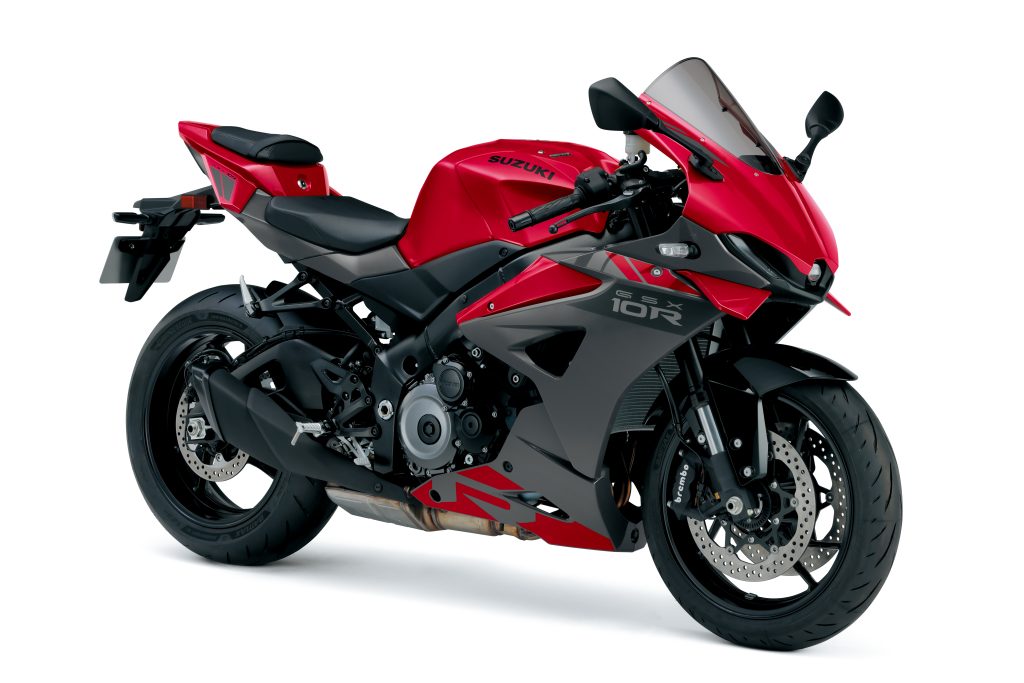
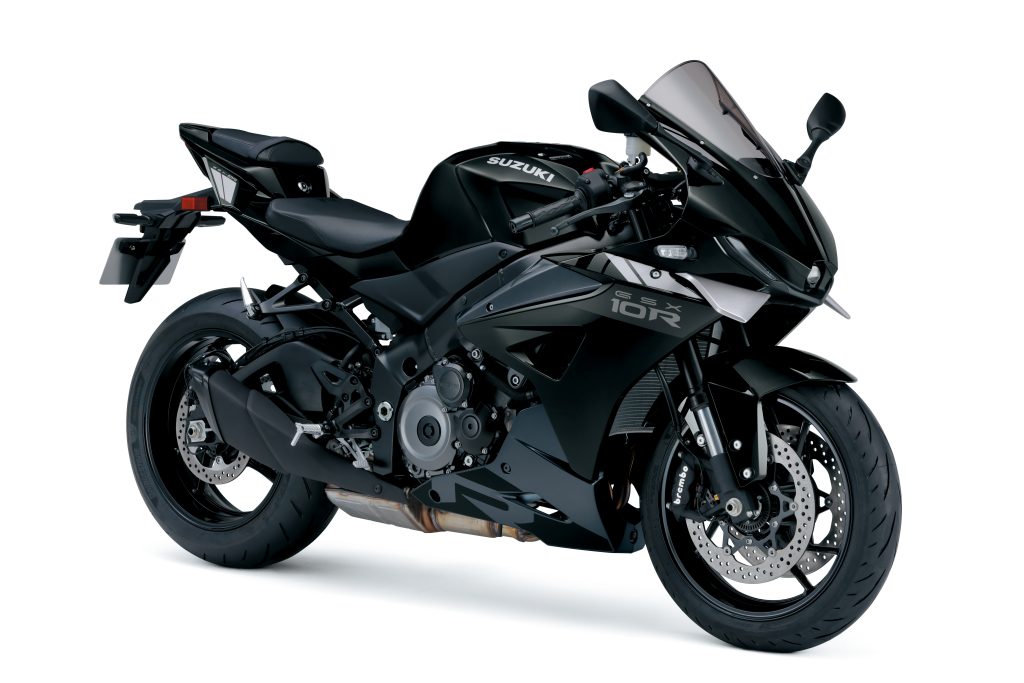
GSX-10R
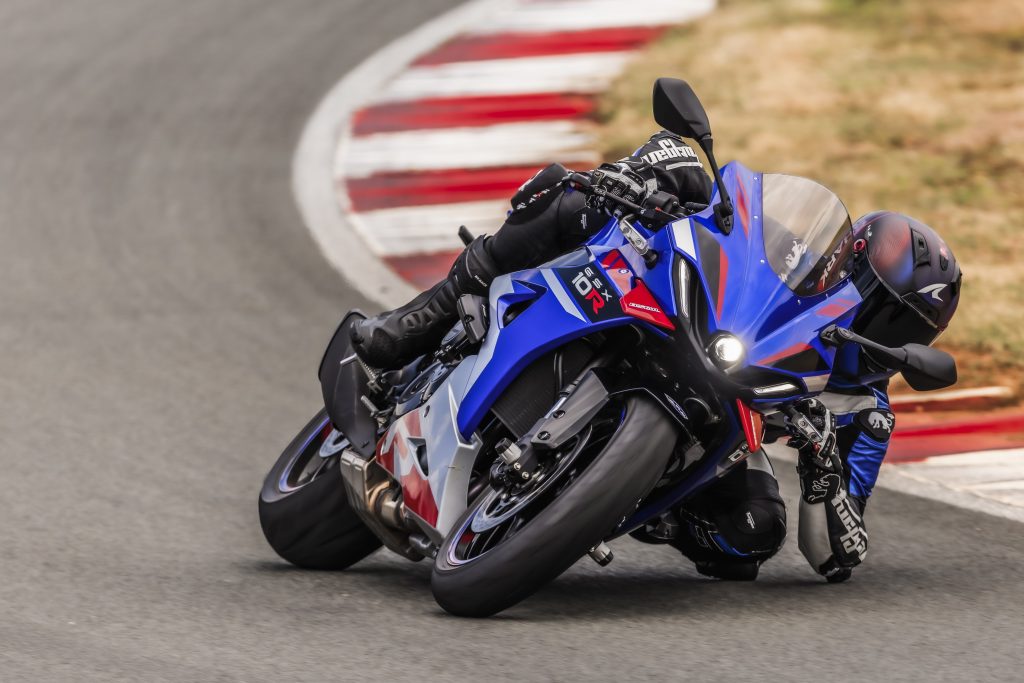
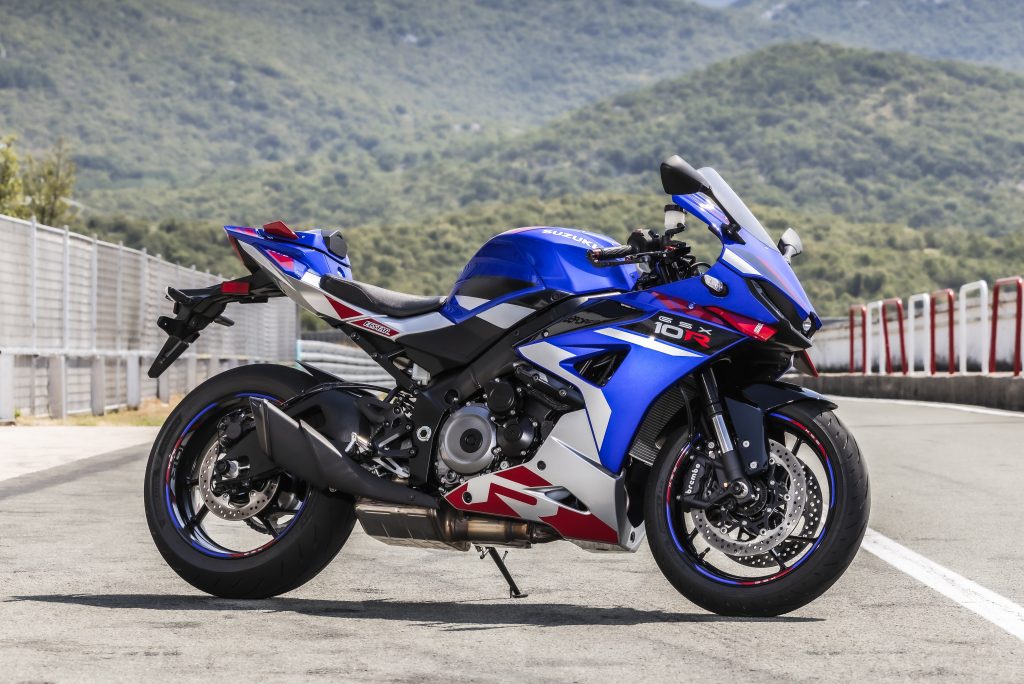
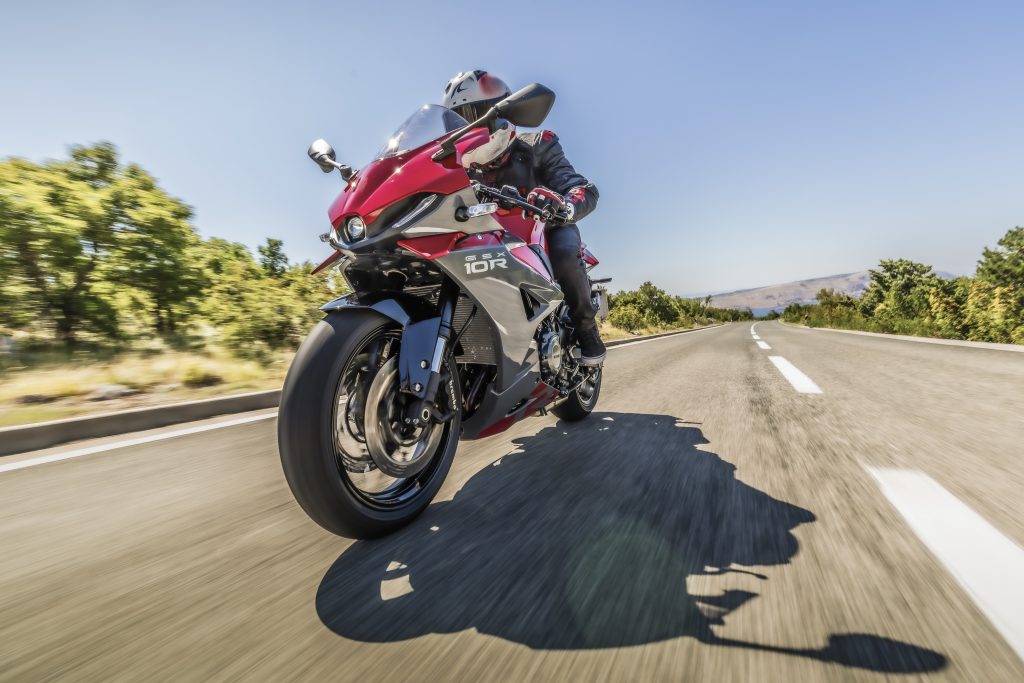
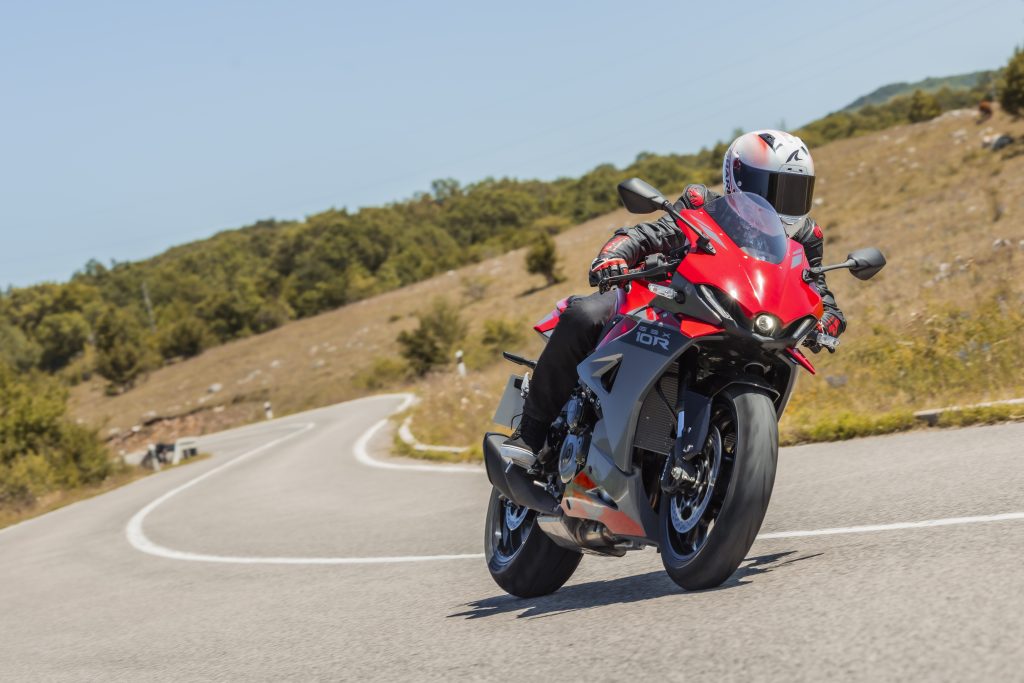
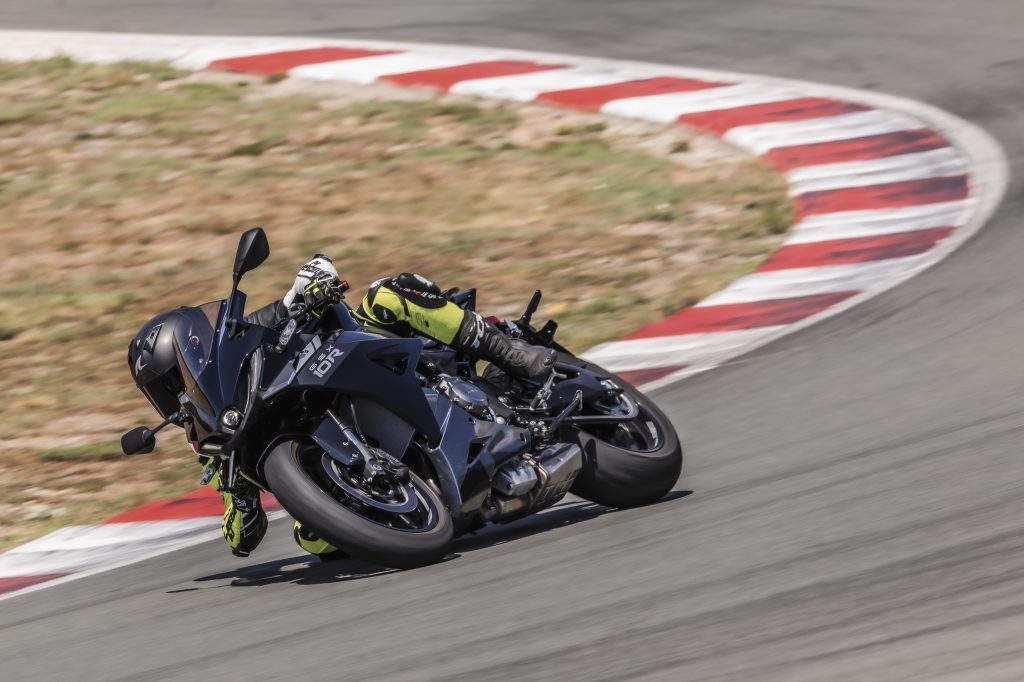
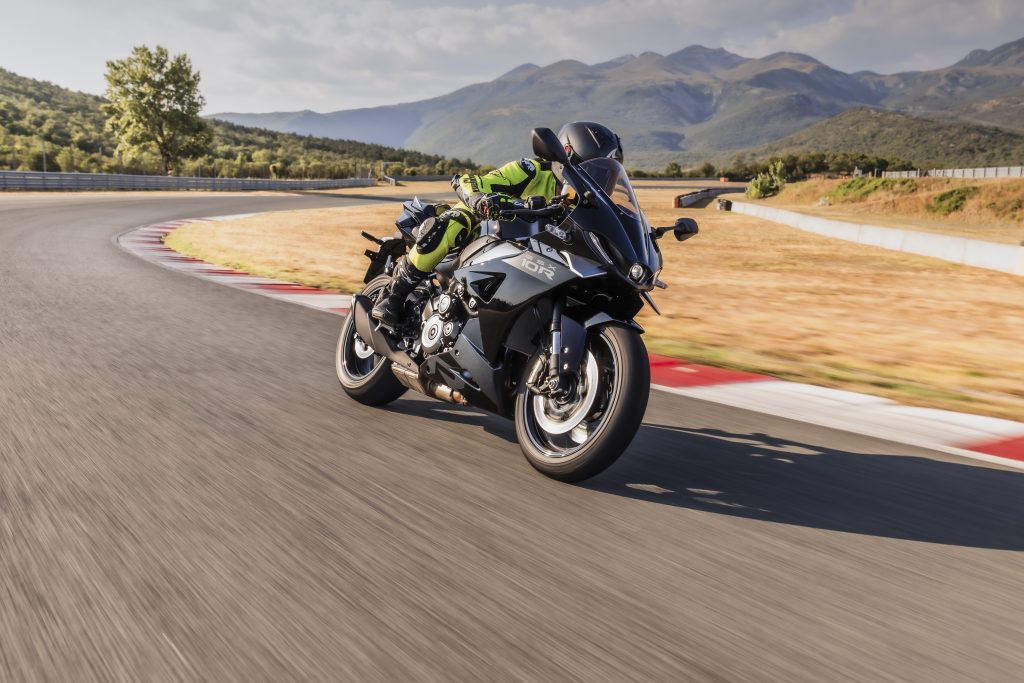
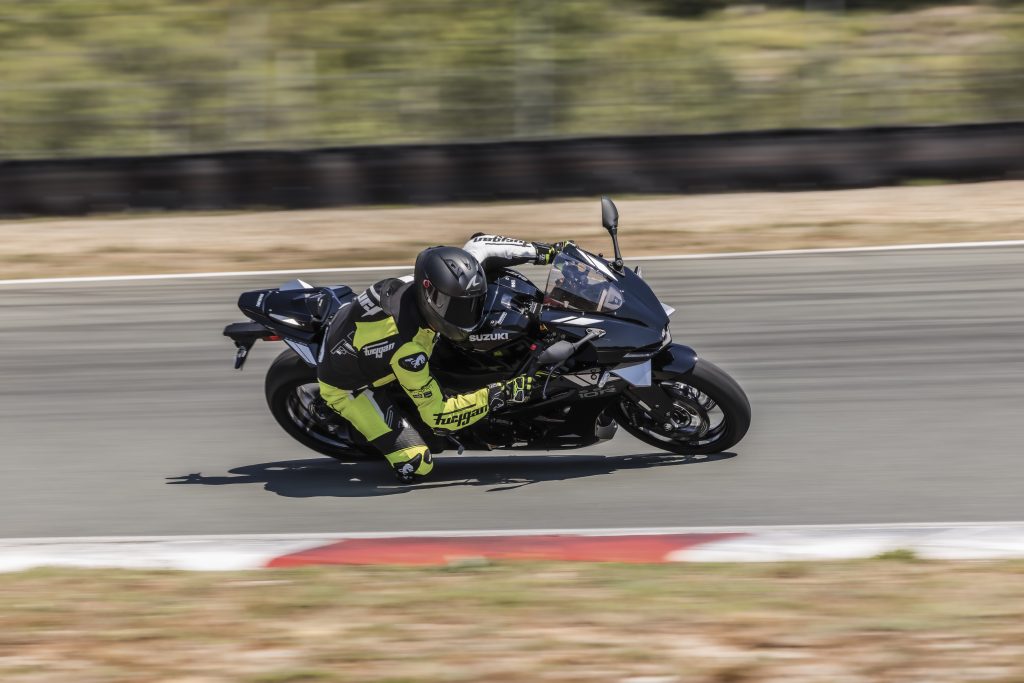
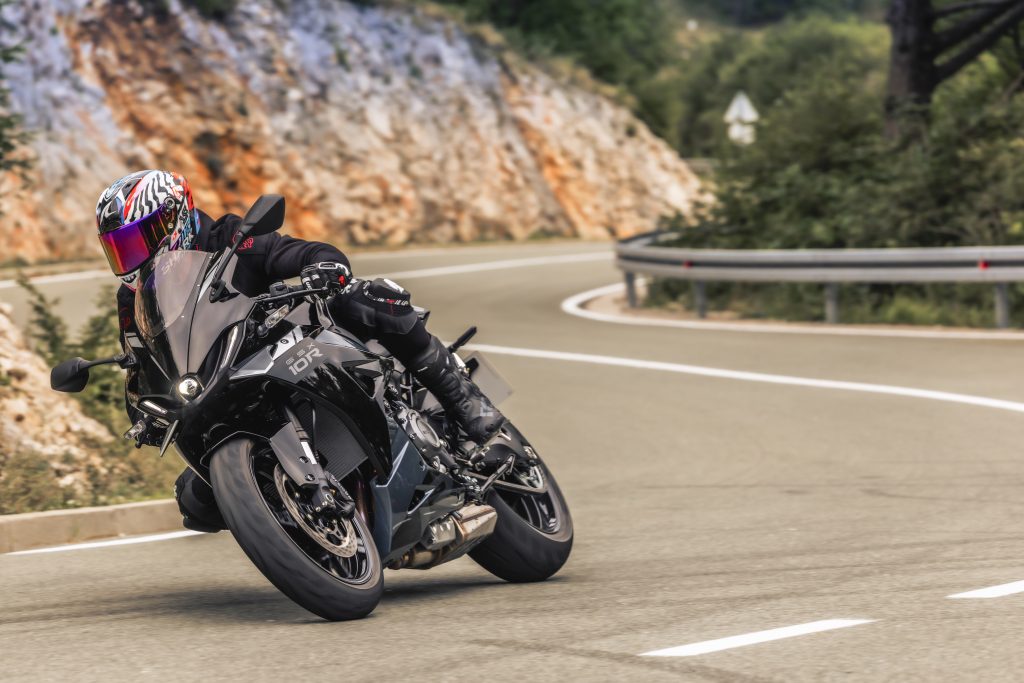
The 10R is a new sportsbike that seeks to redefine the latest, next-generation era of supersport machines. Like all Suzukis, it is built on the guiding principles of run, turn, stop, which ensures that all Suzuki models adhere to these fundamentals through proper design, with electronics used to enhance performance, not make up for manufacturing shortcomings.
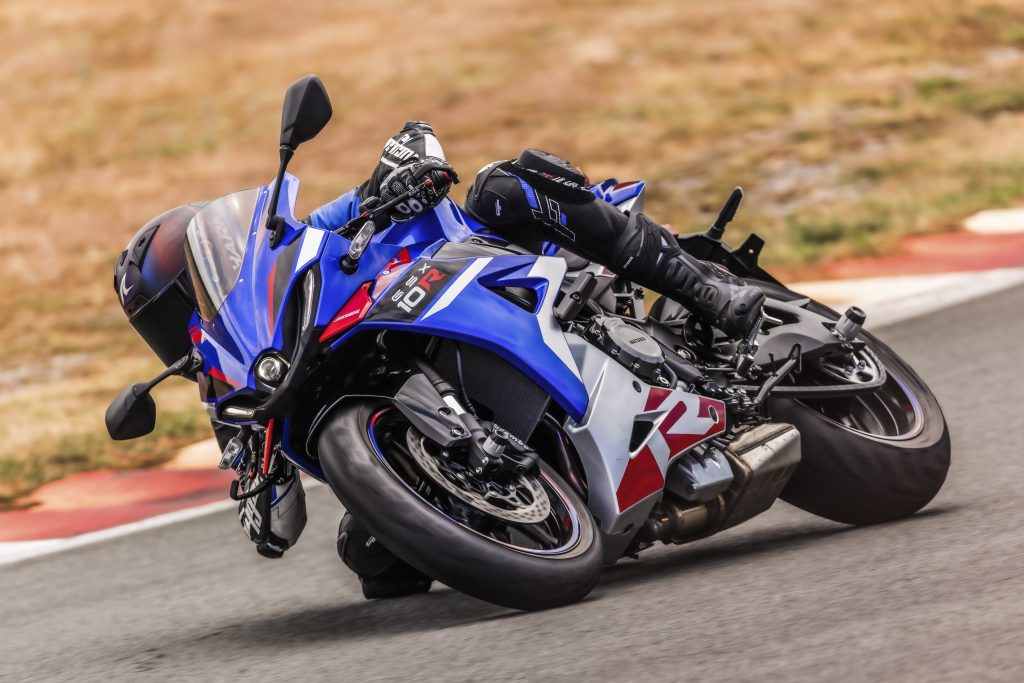
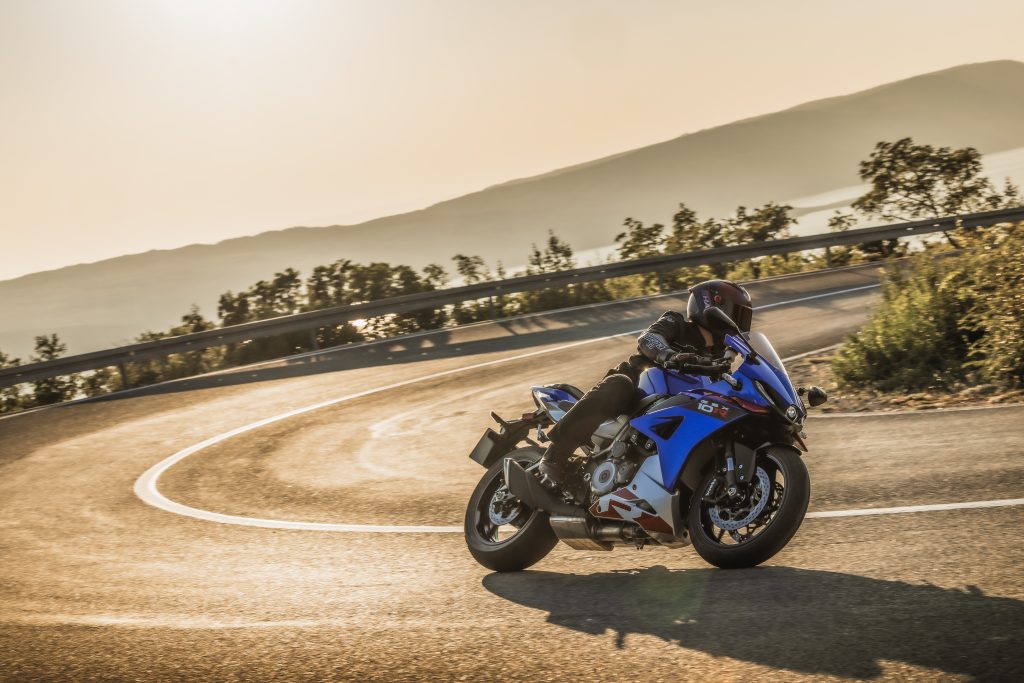
Built by a team that boasts experience when it comes to both designing race bikes and riding them, the 10R is made for fun and aims to offer a sportsbike for pure enjoyment, whether that enjoyment is found on city streets, b-road blasts, or the racetrack.
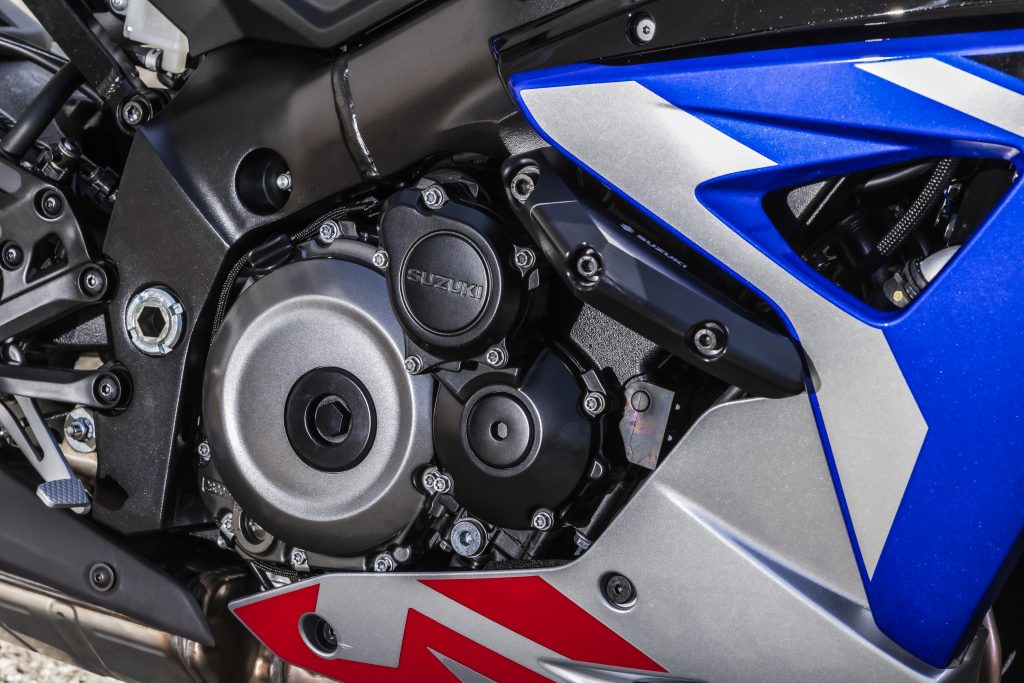
Engine
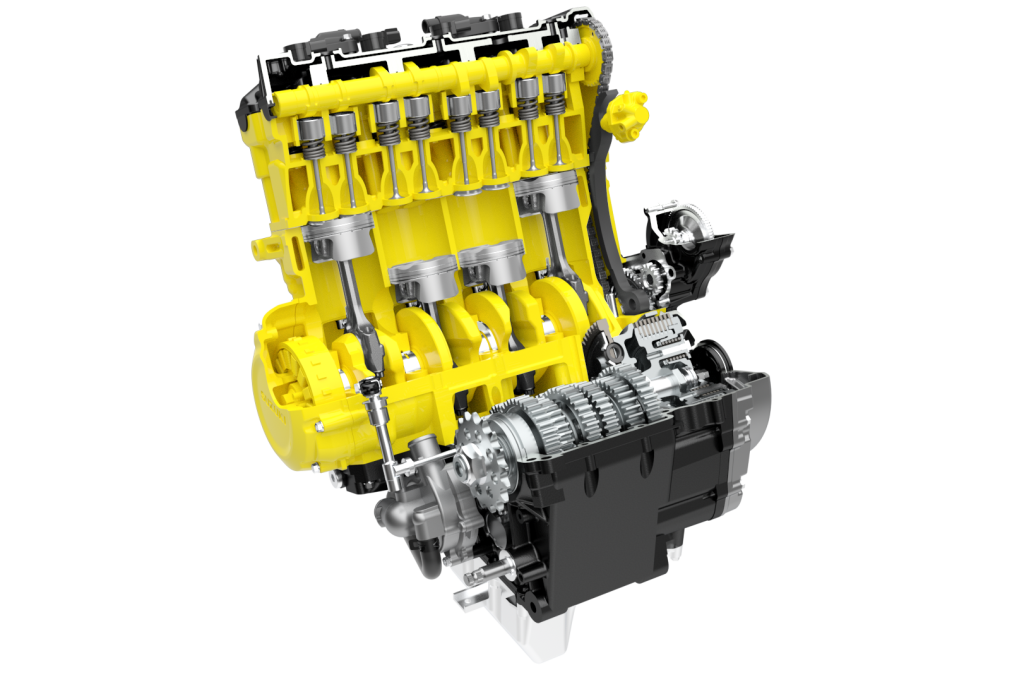
It uses Suzuki’s 152PS inline four-cylinder engine, widely praised for its almost-raw nature, providing a direct, tangible connection between the rider and the rear wheel. Peak power comes in at 11,000rpm. The engine is also known for its broad spread of power, too, with peak torque 106Nm at 9,250rpm.
To ensure its ability to balance performance and reliability, as well as futureproof against the introduction of future alcohol-based fuels, the engine in the 10R features new cams, camshafts, and cam chain sprocket, new cylinder head, barrels, and cases, and new crank journals.
There’s a four-into-one exhaust for a raucous soundtrack, and Suzuki’s Slipper Clutch Assist for light lever action and smoother downshifts.
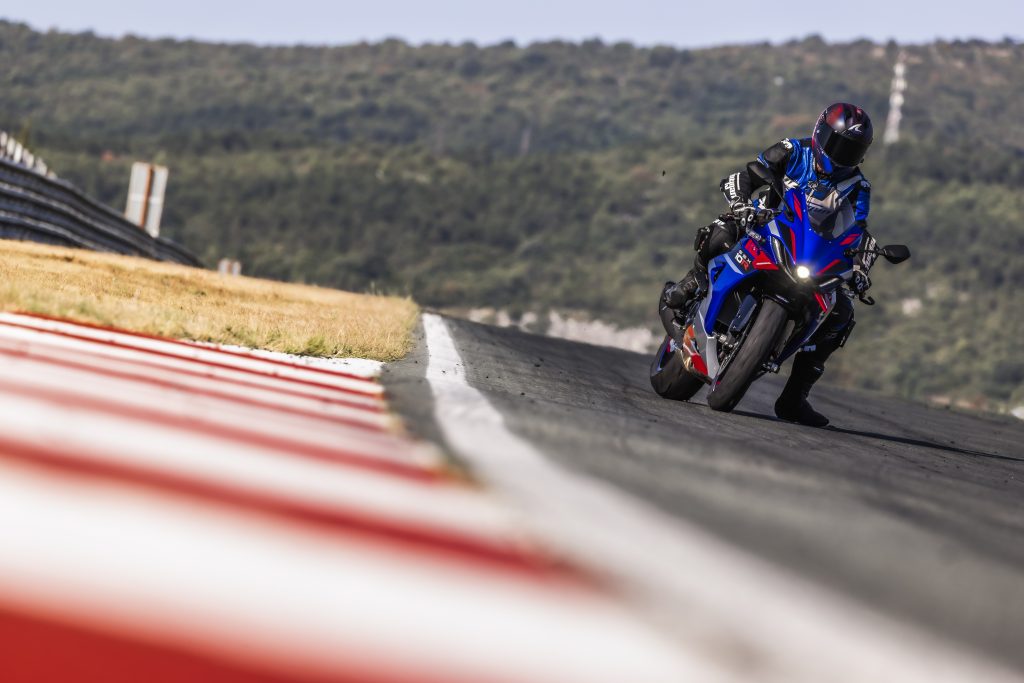
Chassis
Development of the 10R’s chassis focused on the fun element of its concept. While the GSX-R1000R pursues absolute performance, the 10R is to be enjoyed everywhere from the racetrack to the city.
The main spars of its aluminium frame run in a straight line from steering head to swingarm pivot, delivering agile handling and excellent road-holding. To reduce the moment of inertia by concentrating steering mass, the steering stem offset has been changed from 35mm to 30mm, improving cornering performance. This offset value is more akin to that of the GSX-R1000R, which is 28mm. There’s also a new aluminium swingarm, and new subframe.
The 10R is also similar to the GSX-R1000R when it comes to the ergonomics, and mirrors the superbike’s seat, handlebar, and footpeg triangle, further highlighting its sporting and racetrack prowess.
Cast aluminium wheels are shod with Bridgestone Battlax Hypersport S23 tyres, with a 120/70 R17 front and 190/55 R17 rear. Front brake calipers from Brembo bite 310mm discs, with a radially mounted front brake master cylinder. Suspension is fully adjustable from KYB, with 43mm diameter forks, with new brackets that balance rigidity and weight, inheriting the design philosophy of the GSX-R1000R. The rear shock is newly designed for the 10R.
The fuel tank is 18 litres, and the seat height is 810mm, 15mm lower than the GSX-R to make it more accommodating for a wider range of riders and comfortable in an arrary of riding situations.
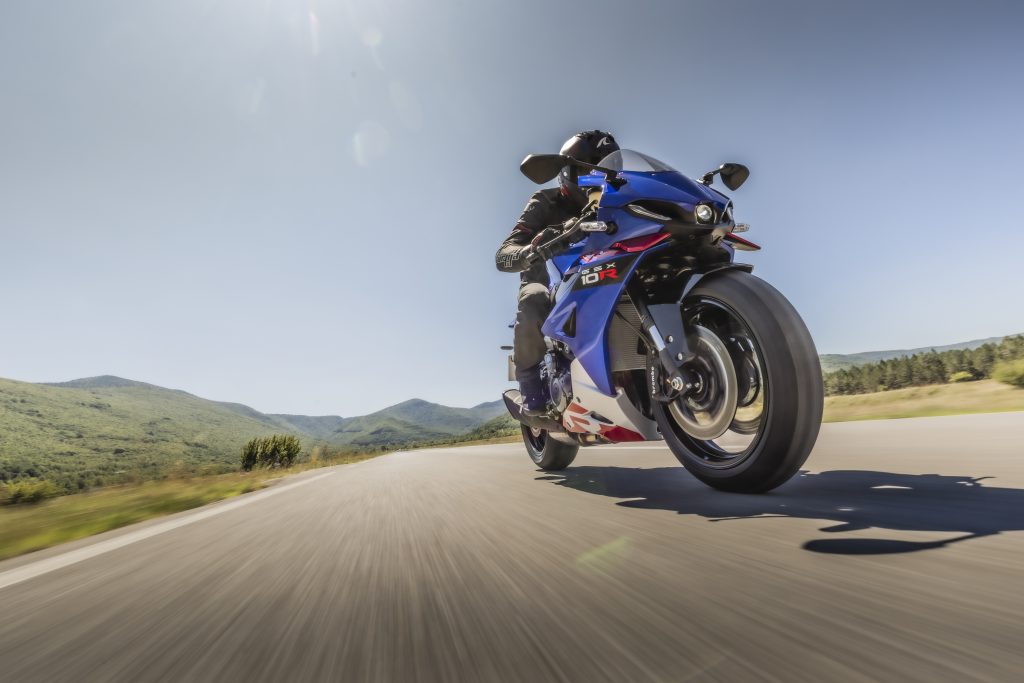
Electronics
A comprehensive suite of electronics ensures the 10R performs on track, as well as boasting impeccable road manners. At the heart of the Suzuki Intelligent Ride System on the 10R is a six-axis IMU that helps govern an array of systems.
Dubbed Suzuki’s Smart TLRS (traction, lift, roll torque, and slide) Control, there are 10 settings for the rider to choose from. The lower the number of the mode selected, the less the system will intervene.
The roll torque element calculates the bike’s lean angle and speed to predetermine the optimal level of power output. A key benefit of the system is smooth operation and uninterrupted drive, when compared to a simple traction control system that activates after wheelspin is detected.
The slide control function works in tandem with the traction control system. Slide control manages the initial stage of a slide, while traction control steps in with stronger intervention to ensure stability if the slide should become unmanageable. By sharing these roles, the two systems assist the rider in maintaining control as the tyre approaches its grip limit.
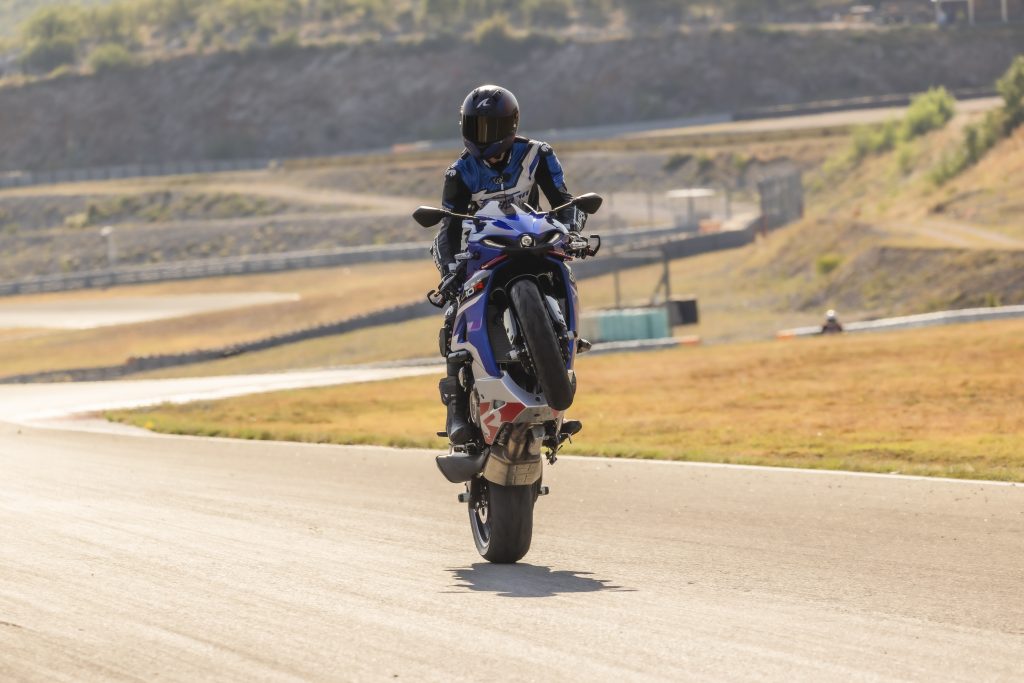
Wheelie is managed via the lift control system, which uses data from the engine speed sensor, throttle and gear position, clutch switch, and the IMU
The electronics package also includes three selectable power modes, each reaching the same level of peak power output but with progressively softer mapping. There’s lean angle-sensitive ABS, a bi-directional quickshifter, three additional choices of engine braking settings, cruise control and an active speed limiter, and launch control. A new brake hold system operates on flat ground and downhill slopes as well as inclines. When the bike comes to a complete stop the system uses IMU data and automatically maintains rear brake pressure for 30 seconds, even after the rider releases the brake. This allows for a smooth restart without the risk of the motorcycle rolling backward. The system disengages when the front brake lever is quickly squeezed twice or when the bike accelerates forward.
Suzuki’s easy-start system means one push of the starter is all that is required to fire the engine, and low RPM assist raises the RPM as the clutch lever is released to help prevent stalling and enable a smoother pull away from stationary.
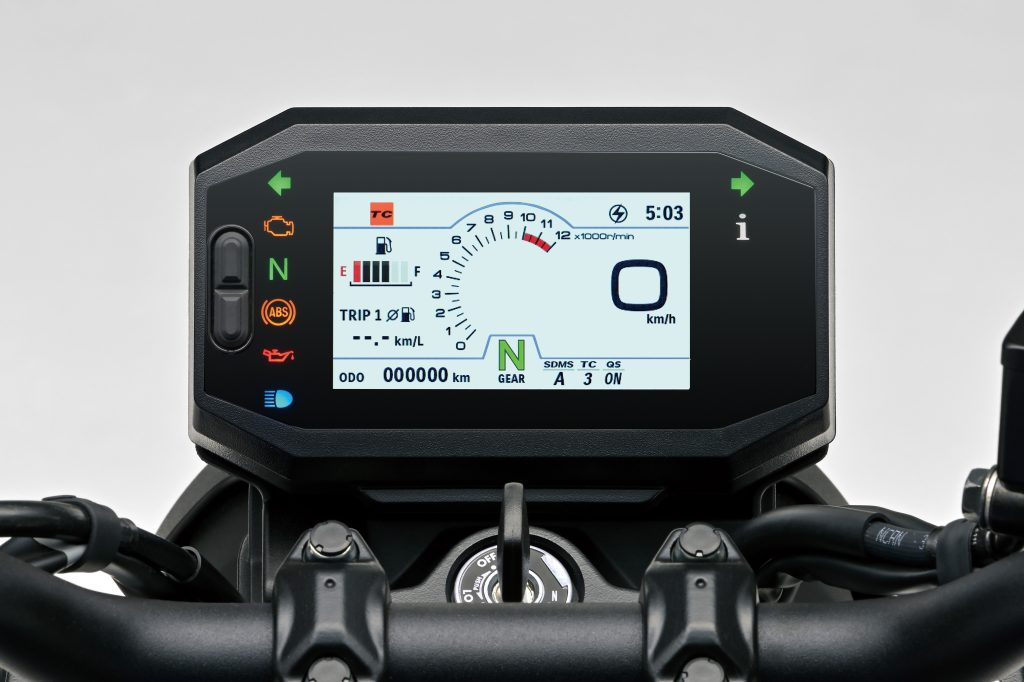
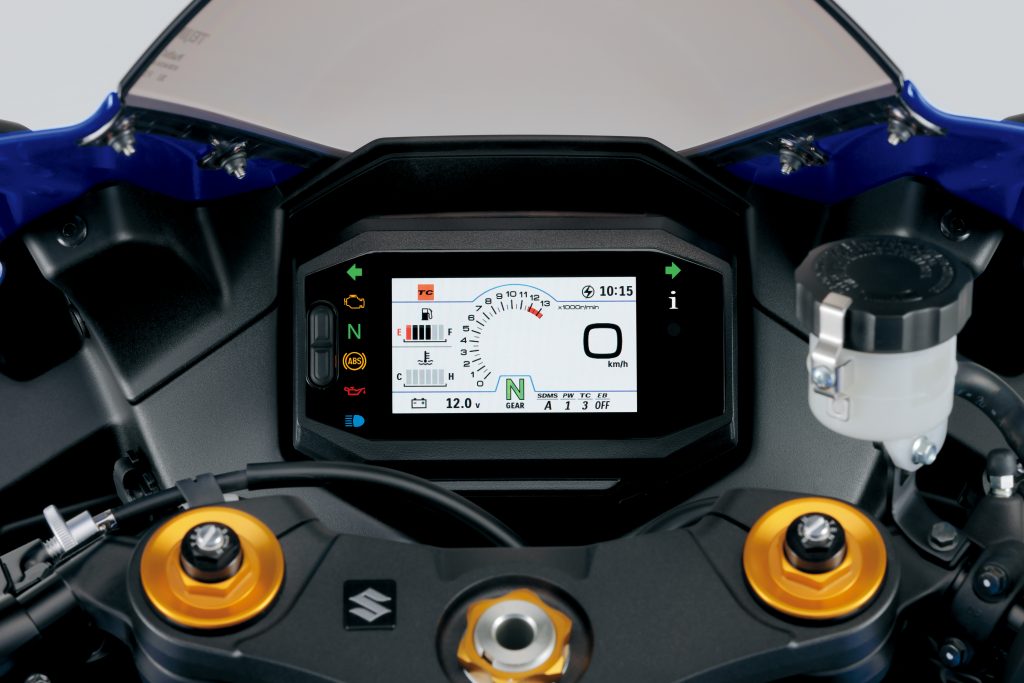
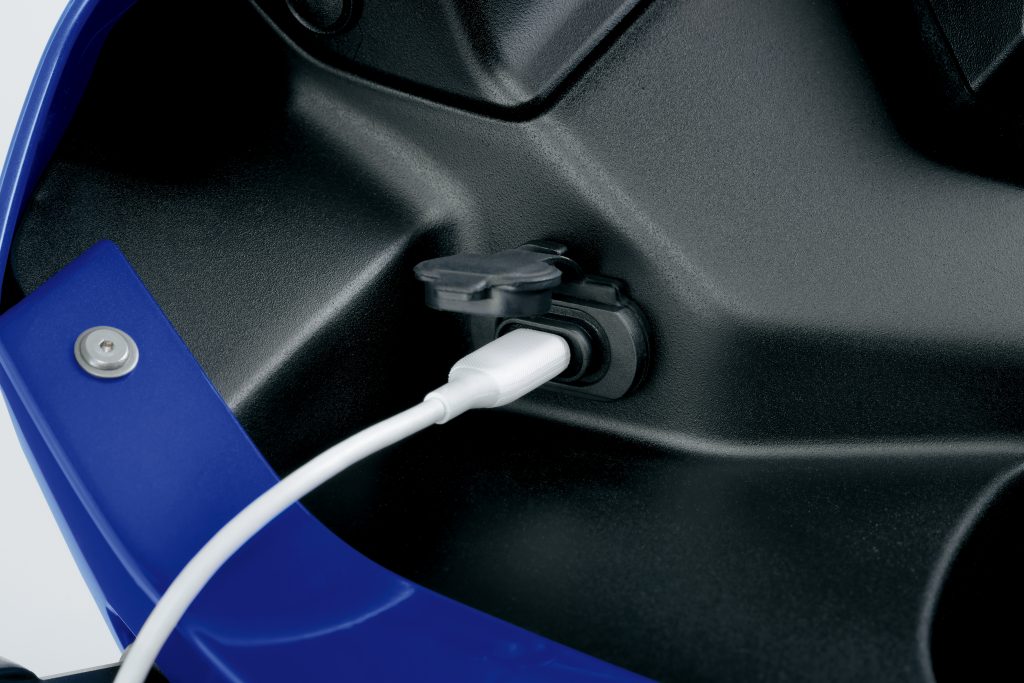
All information is displayed via a compact, full colour TFT screen, which nestles neatly behind the racy fairing and screen and doesn’t compromise the aerodynamic bodywork design. There’s also smartphone connectivity. Using the Suzuki Ride Connect+ app, riders can utilise the system for navigation, incoming notifications, weather updates and other alerts. A USB-C socket is positioned to the side of the dashboard.
Lighting is full LED all round, and a newly developed Suzuki Ground Beacon System more clearly communicates the rider’s intended change of direction, by limiting where the indicators illuminate the ground around the bike.
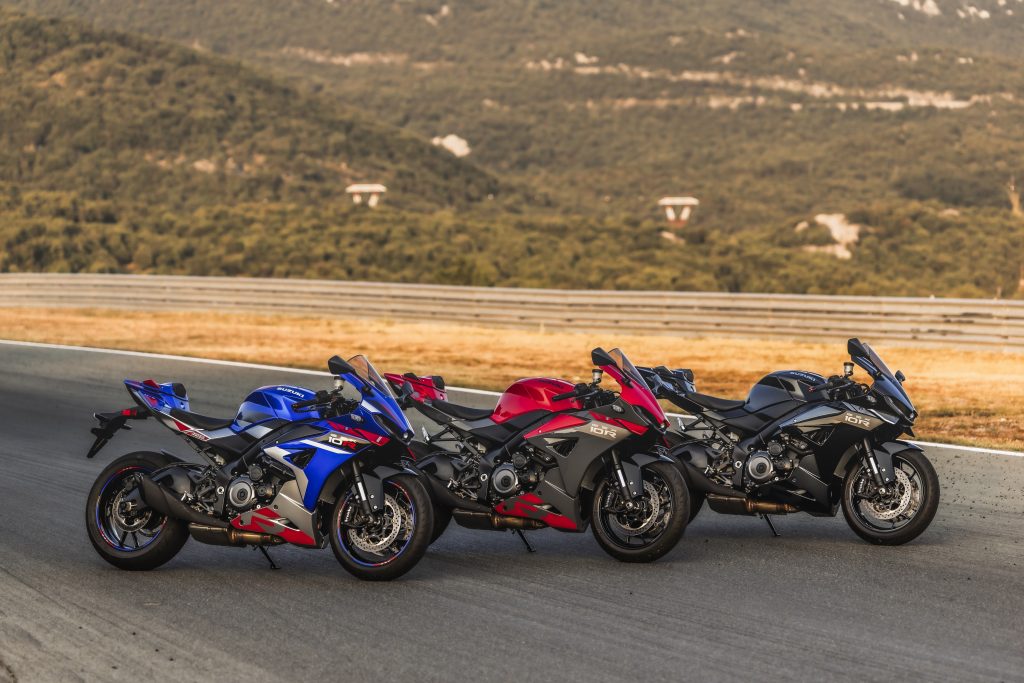
Styling
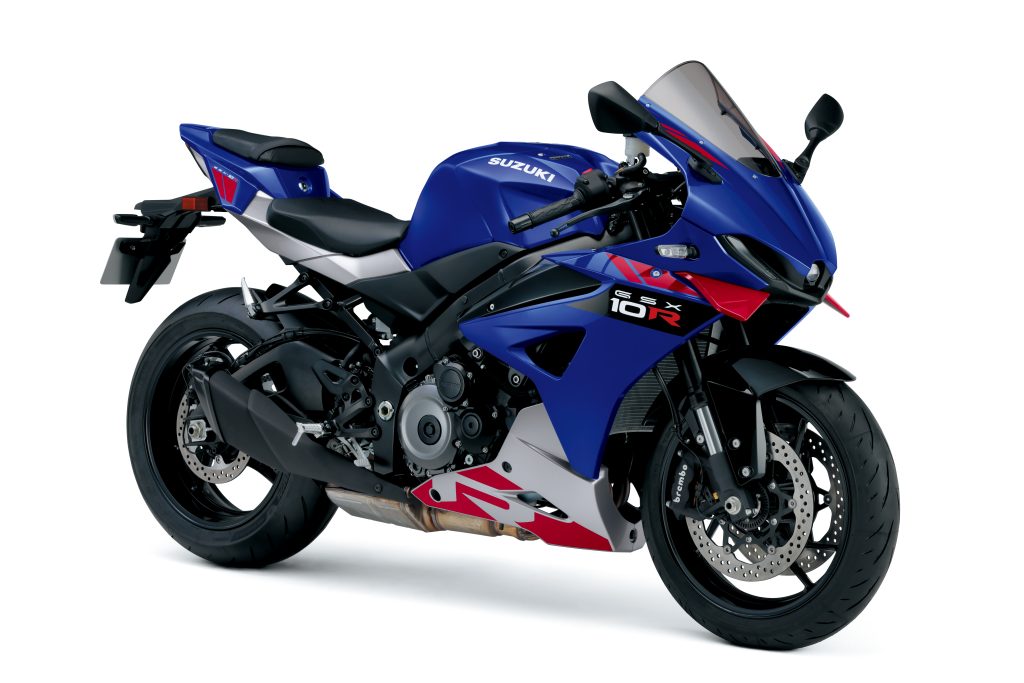
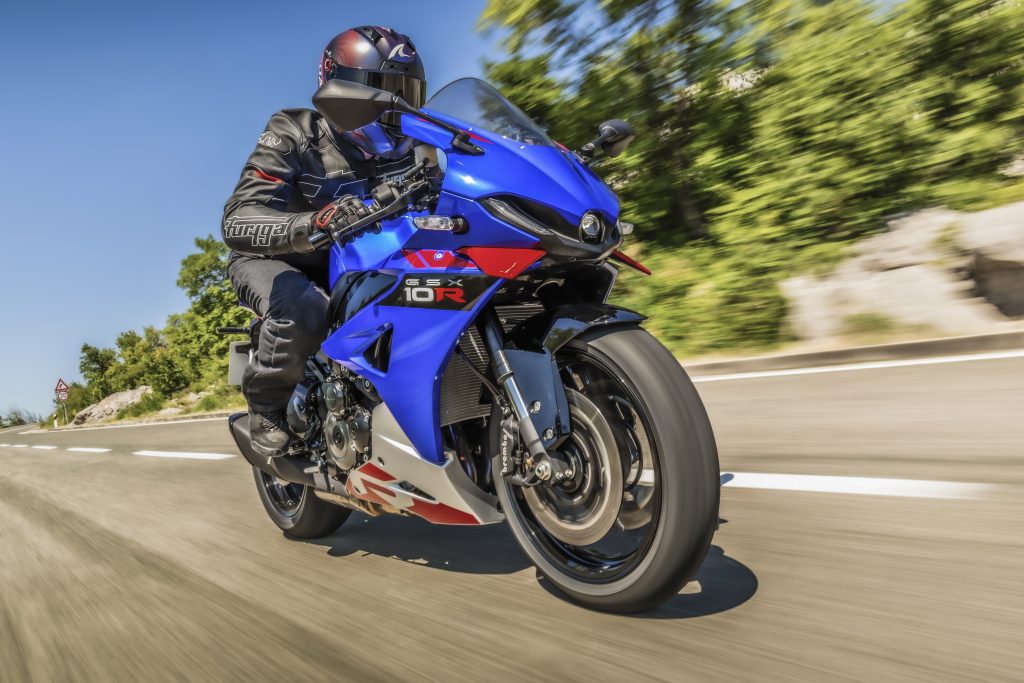
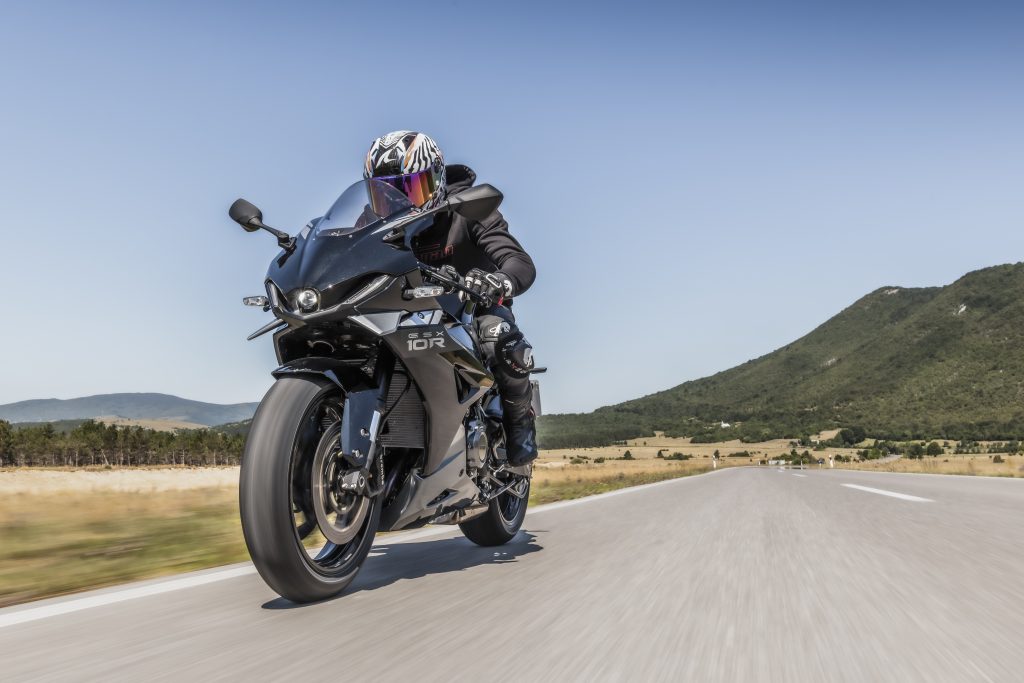
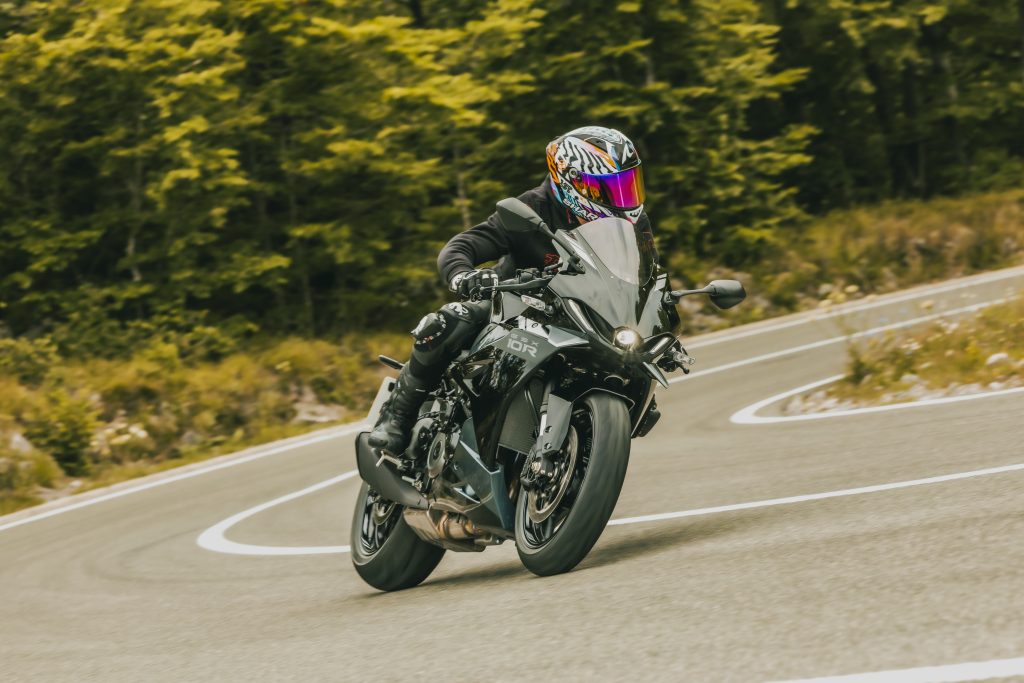
Supersport styling boasts hints of GSX-R, including the LED daytime running light design and front air intakes. The cowl design was optimised through repeated wind tunnel testing to balance aesthetics with aerodynamic performance. The front section, including the windscreen, features a rounded profile that accommodates the rider’s helmet when tucked in.
Subtle winglets adorn the fairing and enhance airflow characteristics and there is an angular seat unit.
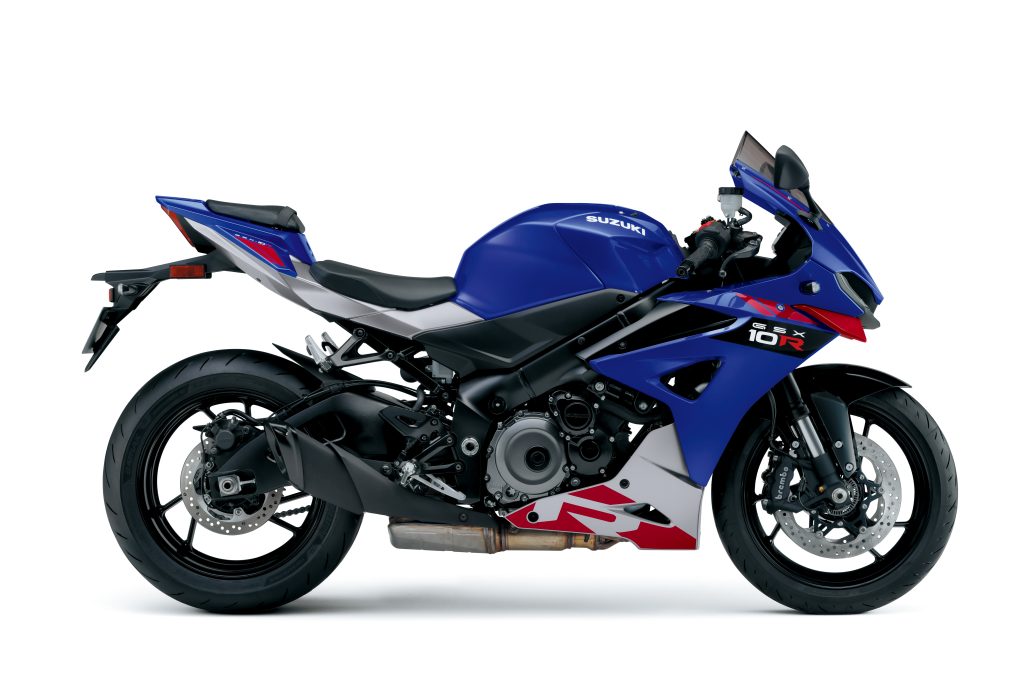
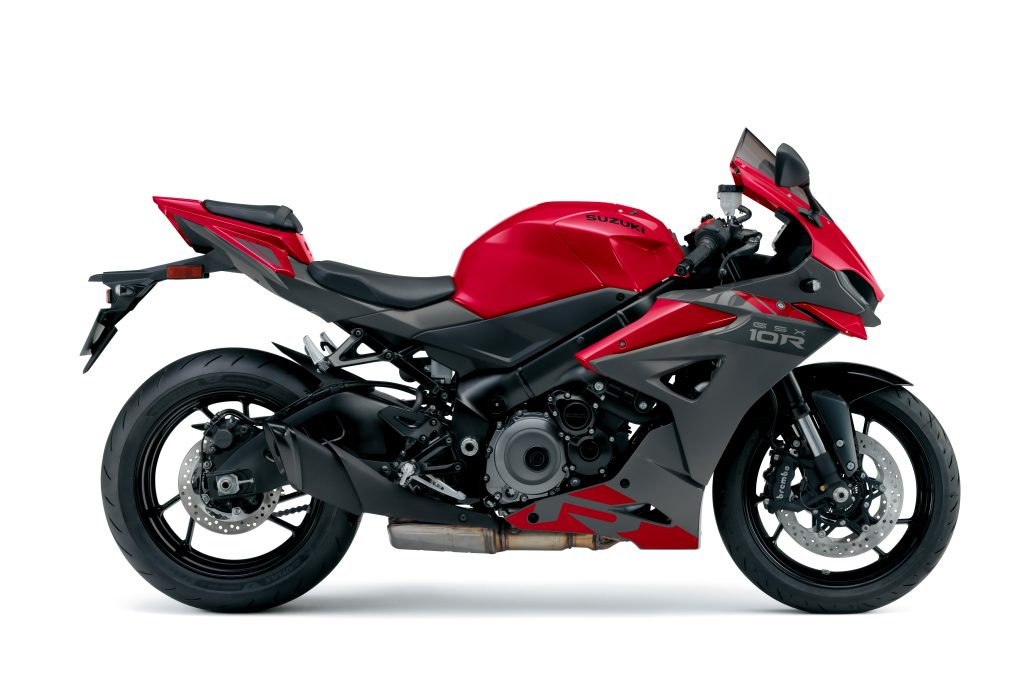
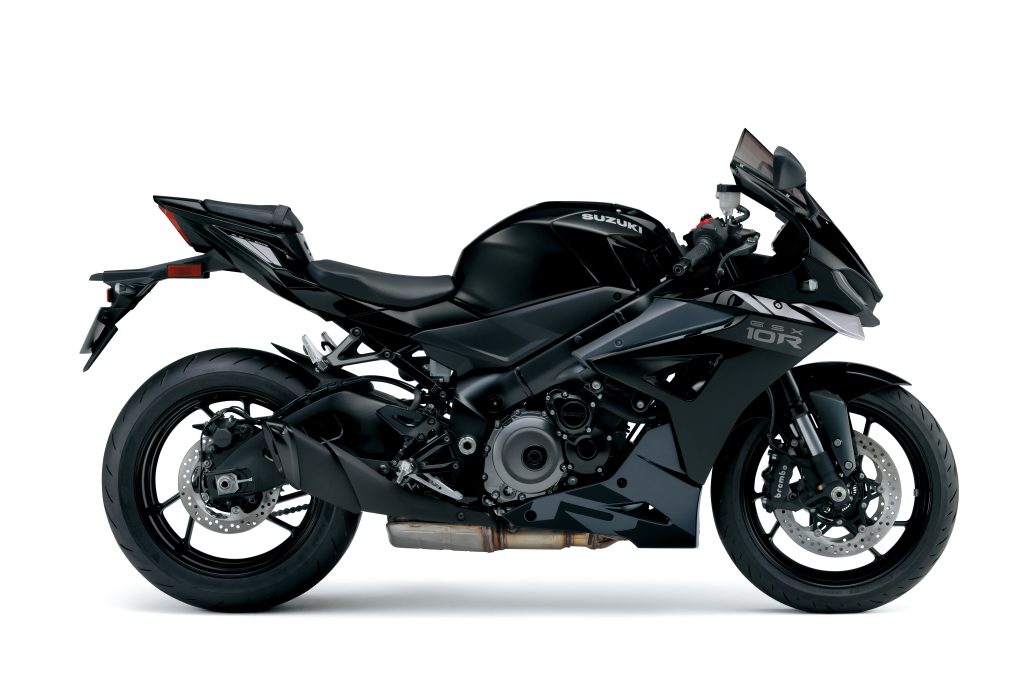
It will come in a trio of colour schemes: Pearl Vigor Blue and Metallic Mystic Silver, finished with red accents, Pearl Pulse Red and Solid Iron Grey, and an understated Glass Sparkle Black and Metallic Galaxy Grey.
It will be available in summer 2027.
For the full model information press kit and additional images, including technical imagery and sketches, click here.
SV-7S
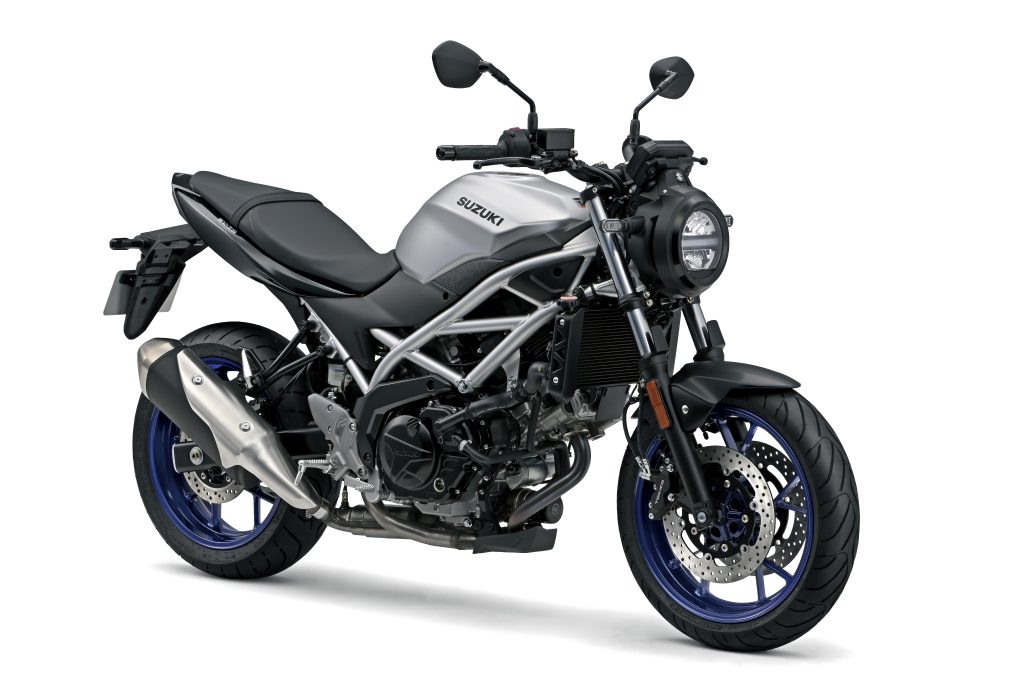
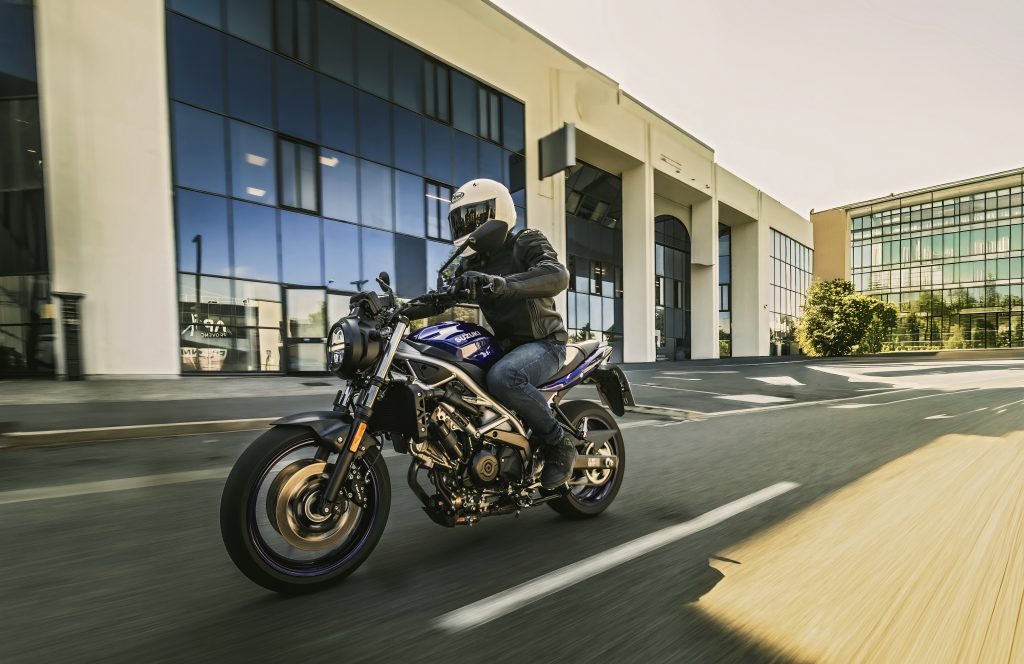
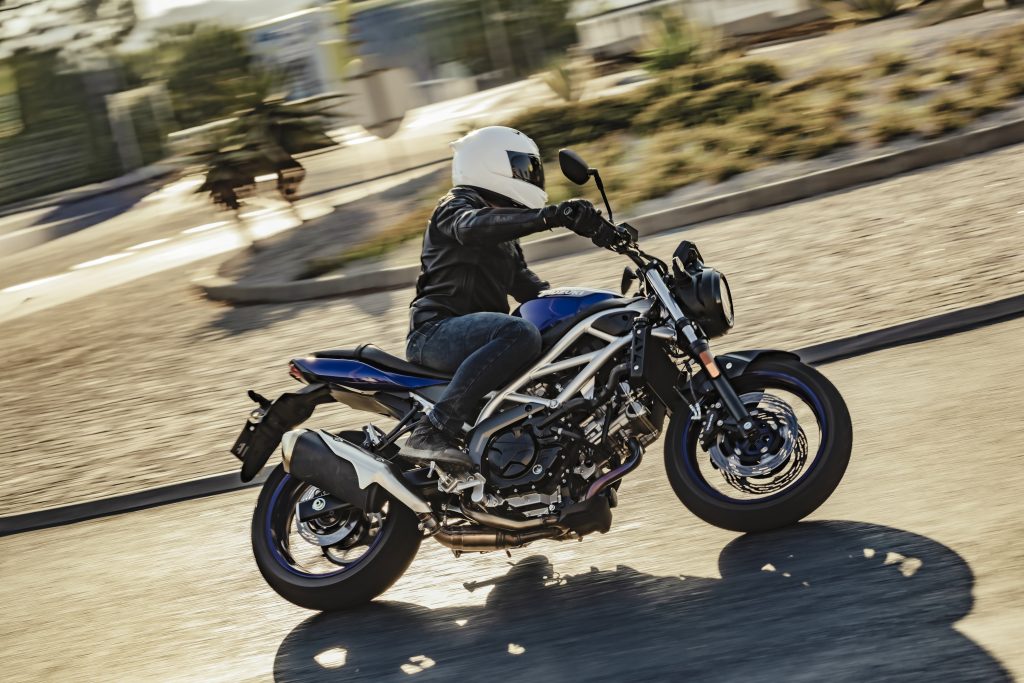
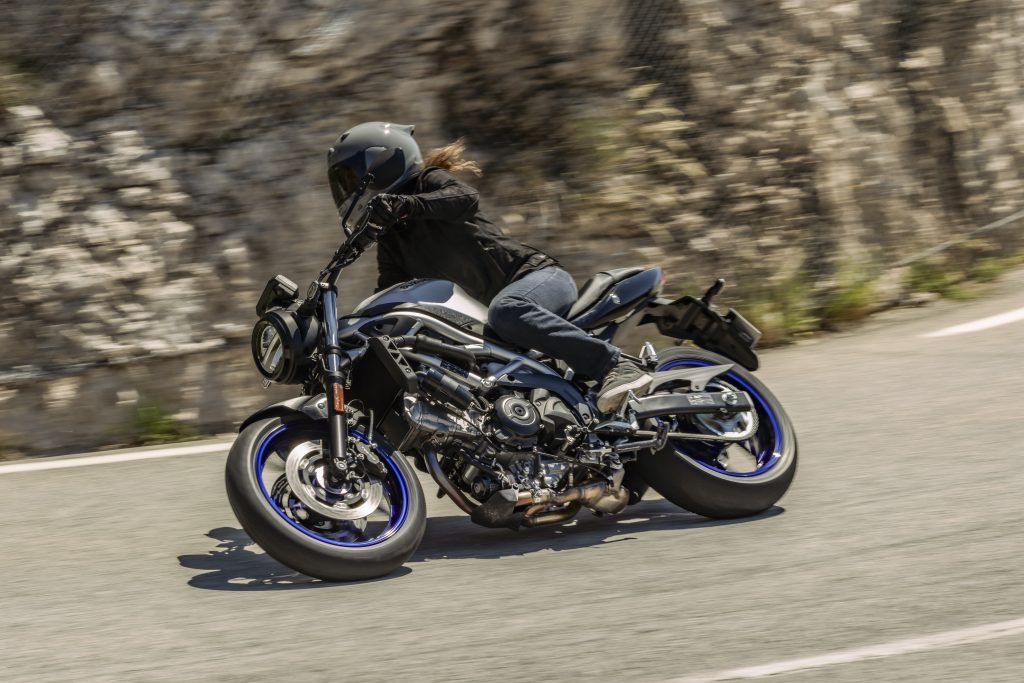
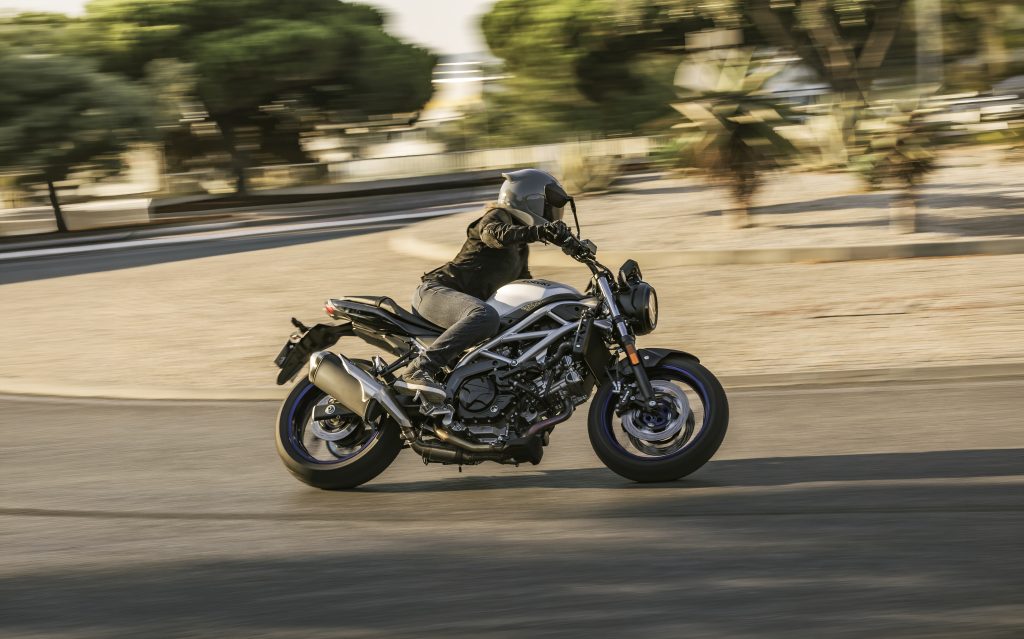
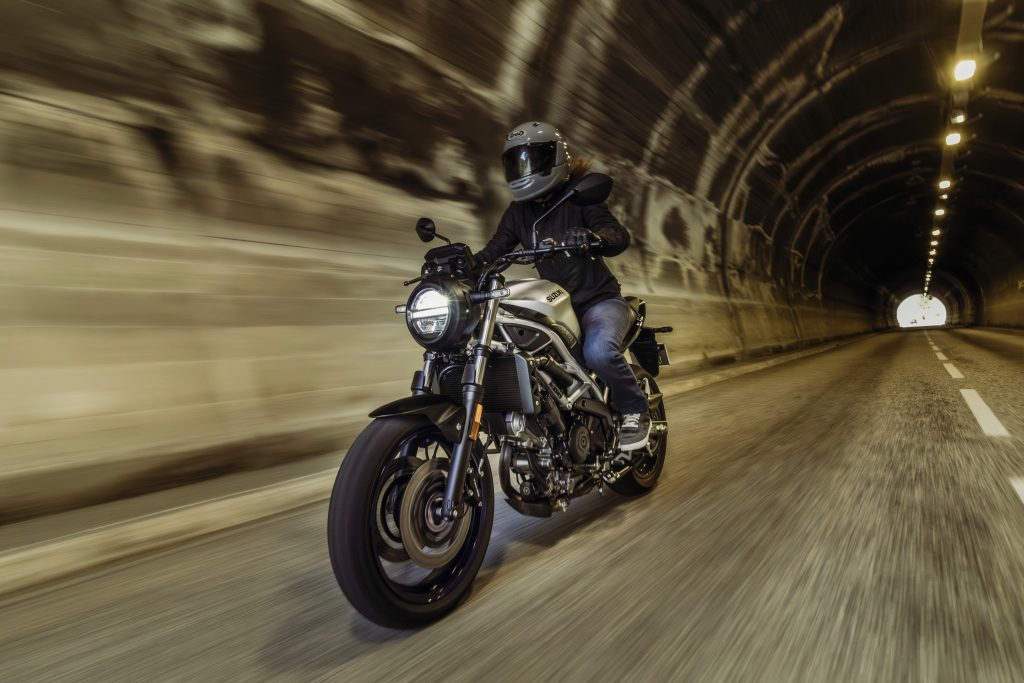
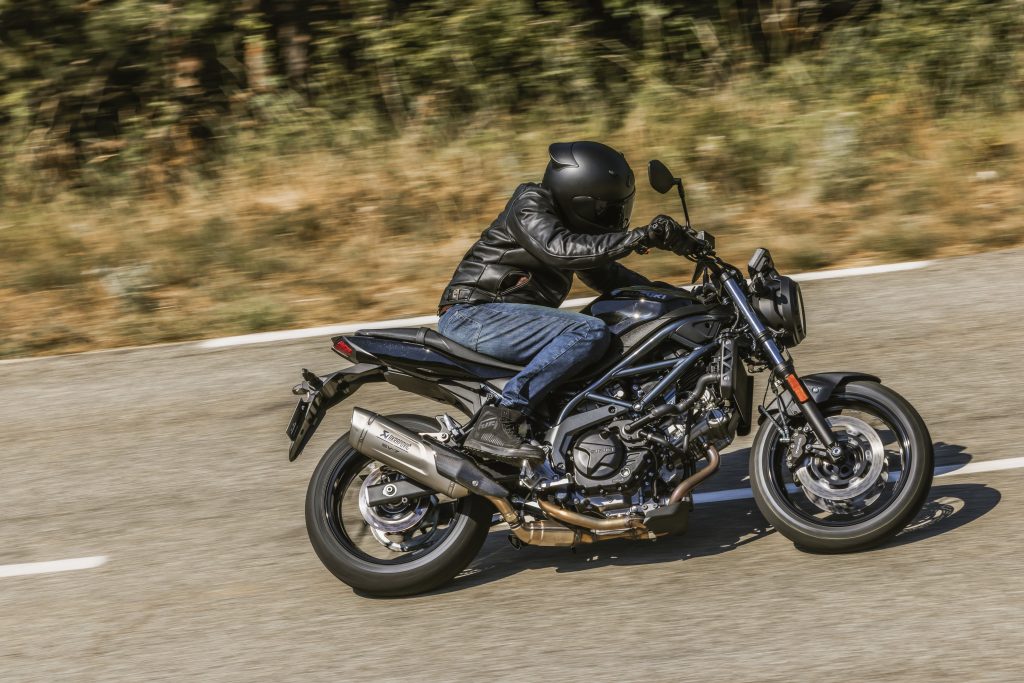
Suzuki’s genre-defining SV650 was launched in 1999 as an affordable, fun, middleweight naked packed with character and performance and, in one form or another, it was on sale until 2025. After a brief hiatus the iconic 645cc V-twin engine was back on sale across Europe in 2026 in the SV-7GX. Now, the 7S builds on that heritage and takes the original vision for the SV650 and brings it up to date with power modes, traction control, a bi-directional quickshifter, and a colour TFT screen with smartphone connectivity, ensuring it is easy to ride, hard to forget.
Engine
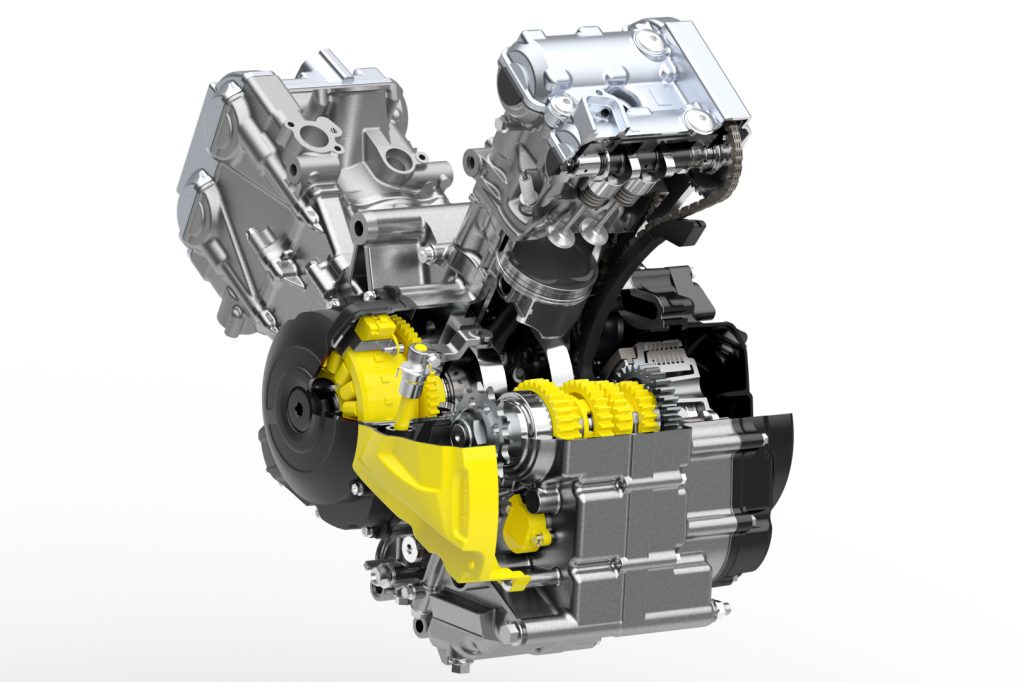
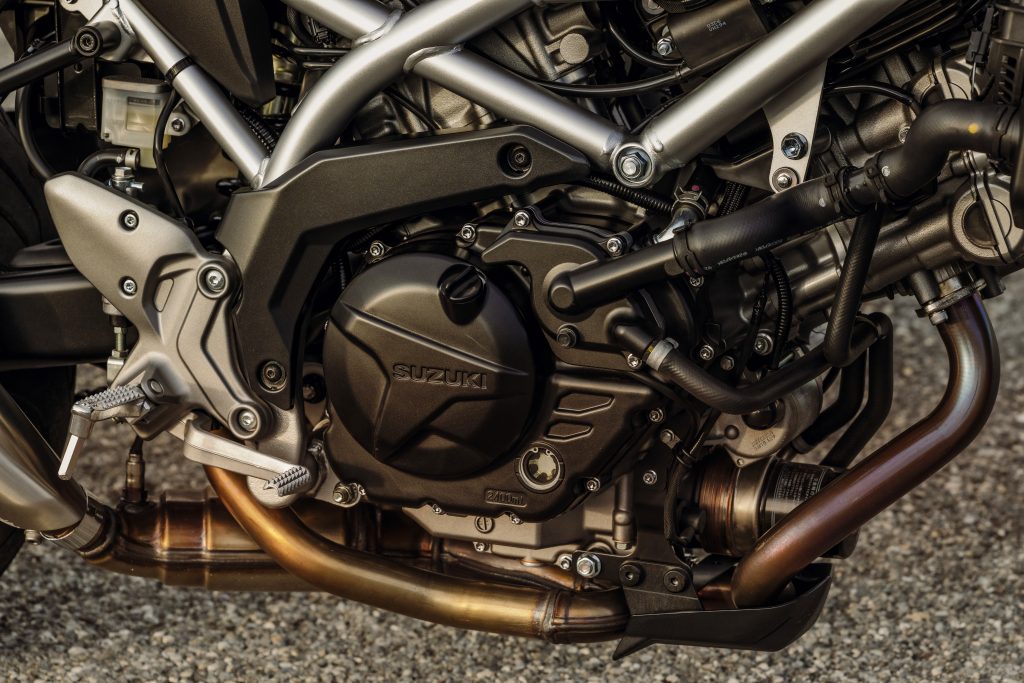
Having appeared in more than half a million motorcycles since its introduction in 1999, the 645cc 90-degree V-twin is renowned for its character. It produces 73PS at 8,500rpm, with peak torque 64Nm at 6,800rpm.
Suzuki Composite Electrochemical Material (SCEM) cylinder plating ensures optimal heat dissipation, and its highly effective oil-jet piston cooling enhances thermal stability and high-load performance. Changes for the latest version of the iconic engine include new transmission gears and a new magneto.
A downdraft-style intake layout positions the air box directly beneath the fuel tank, aiding a lower seat height and slimmer profile. There are updates to the intake and electronic throttle bodies, which work with the SV-7S’ new electronic systems. A new catalytic converter helps meet Euro5+ emissions regulations.
Chassis
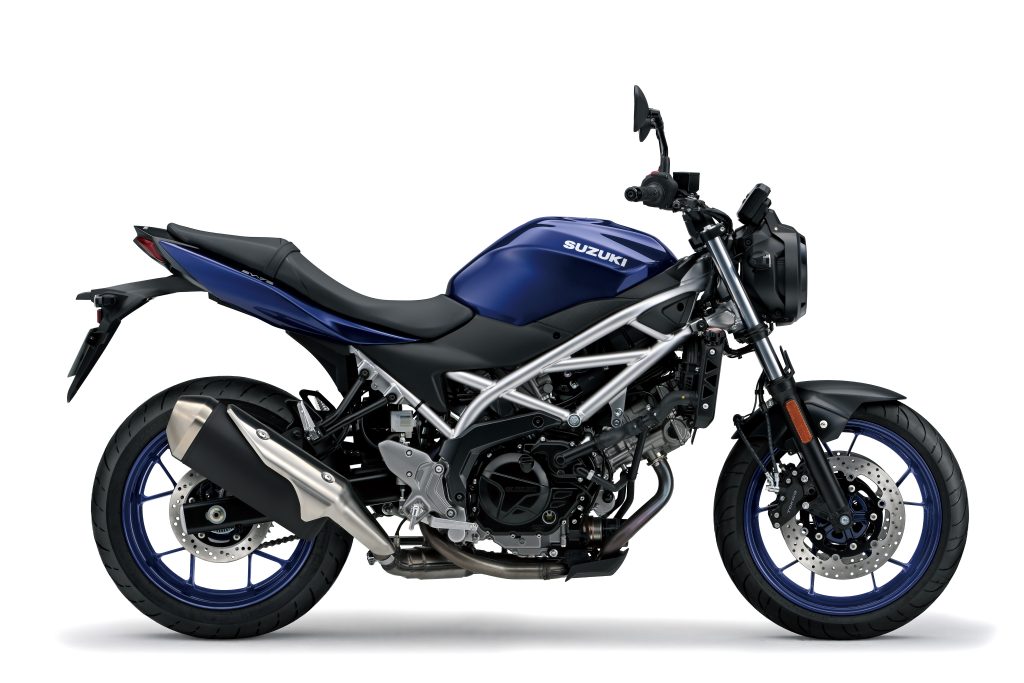
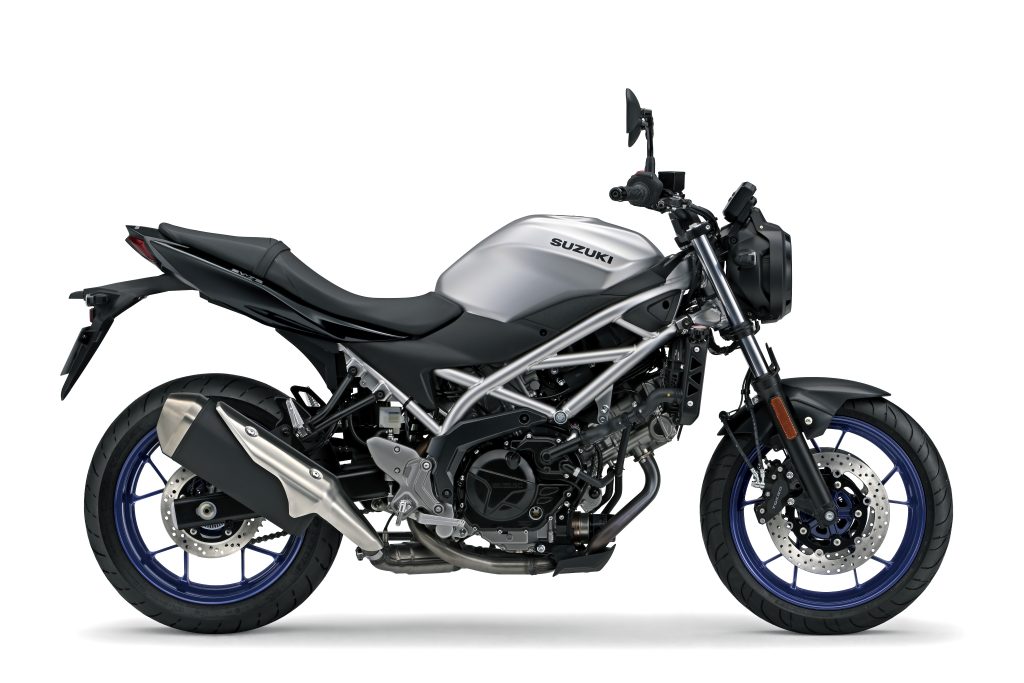
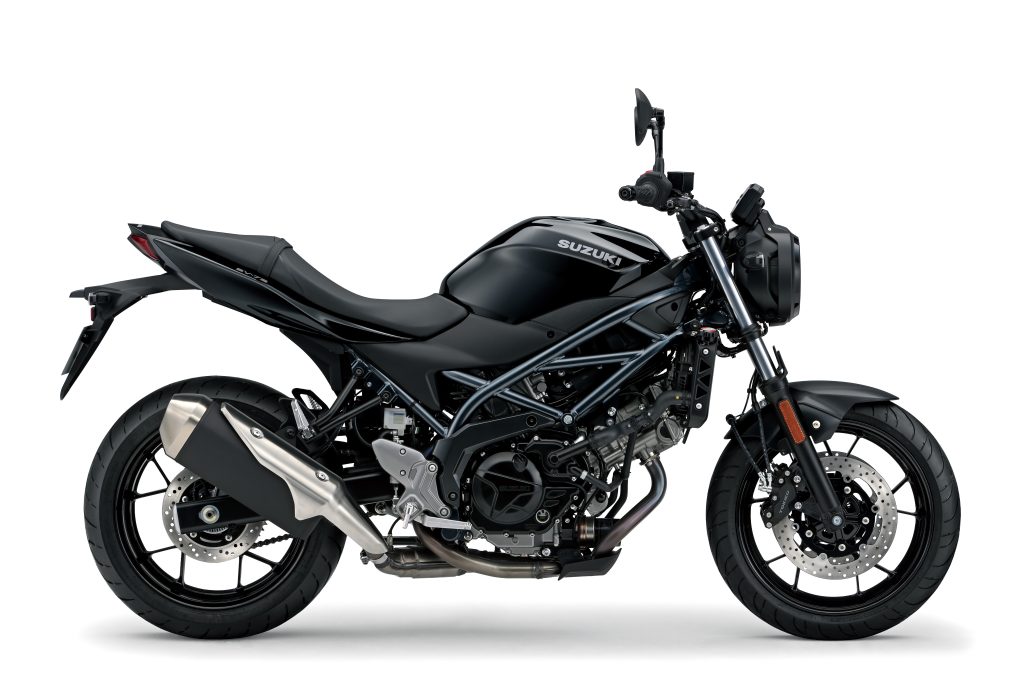
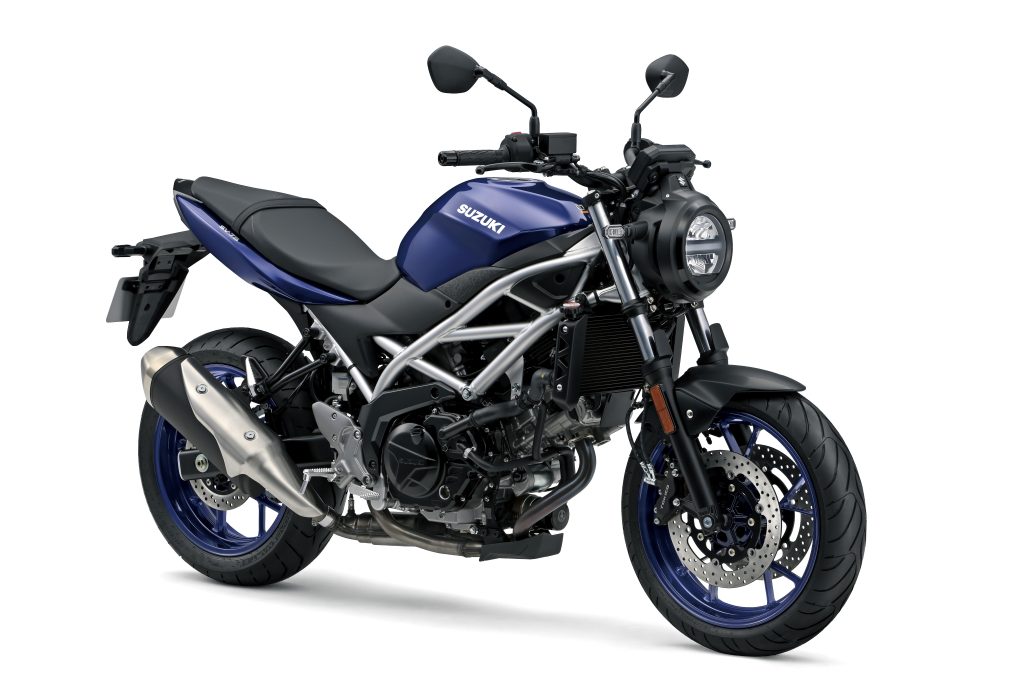
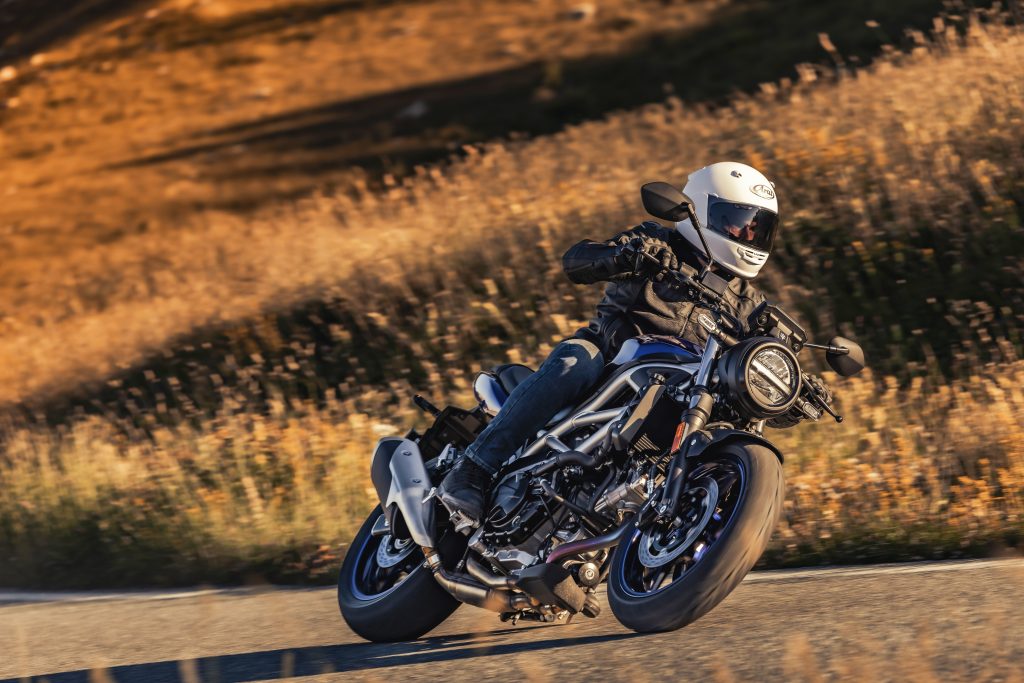
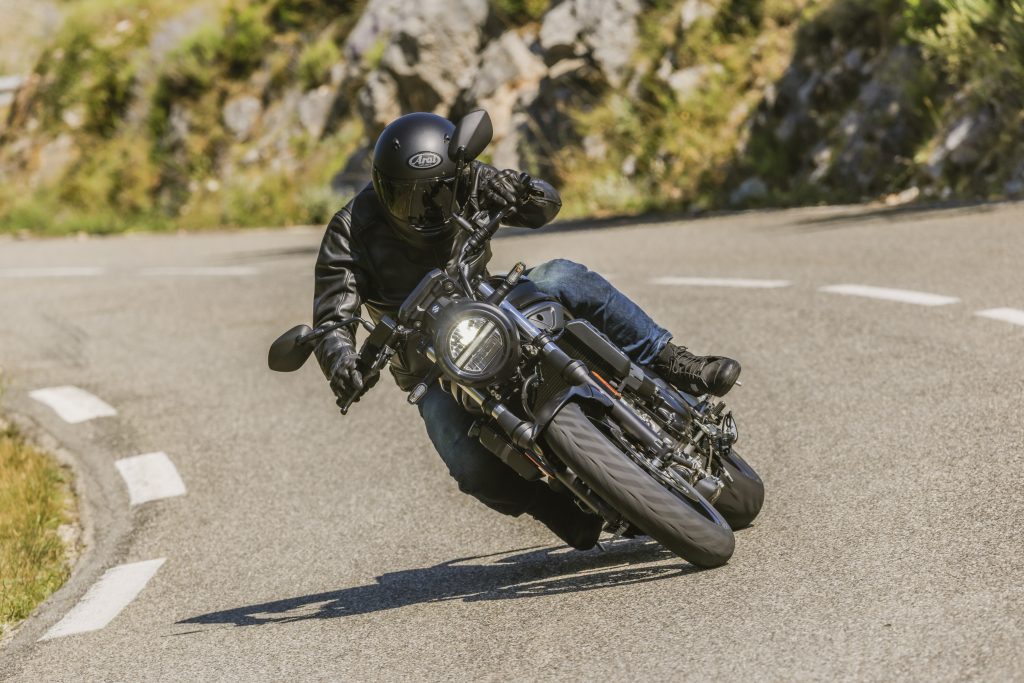
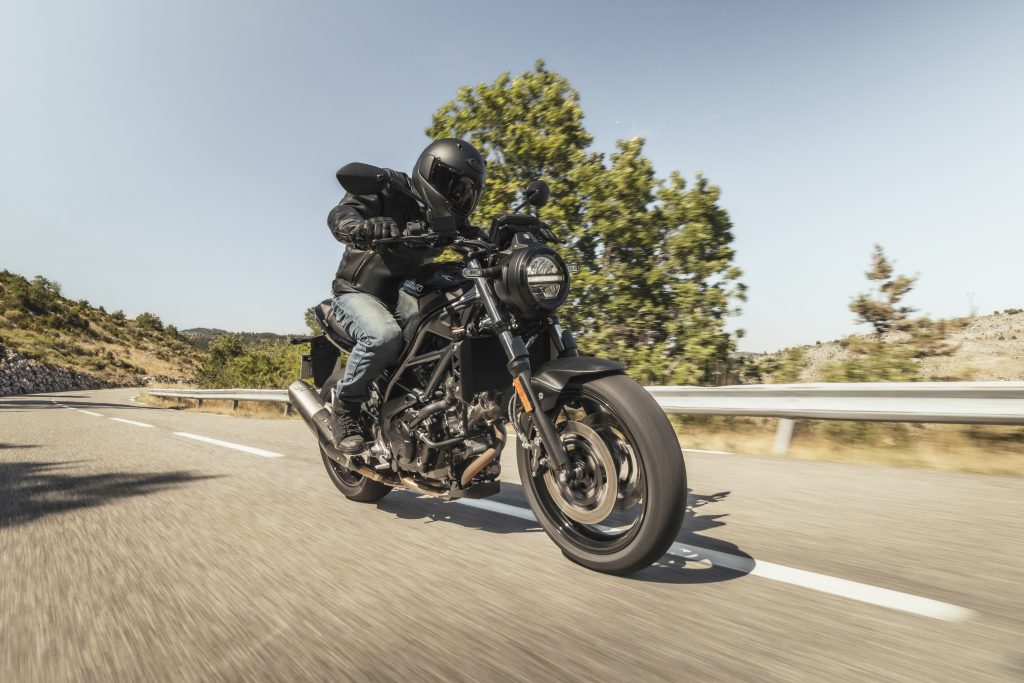
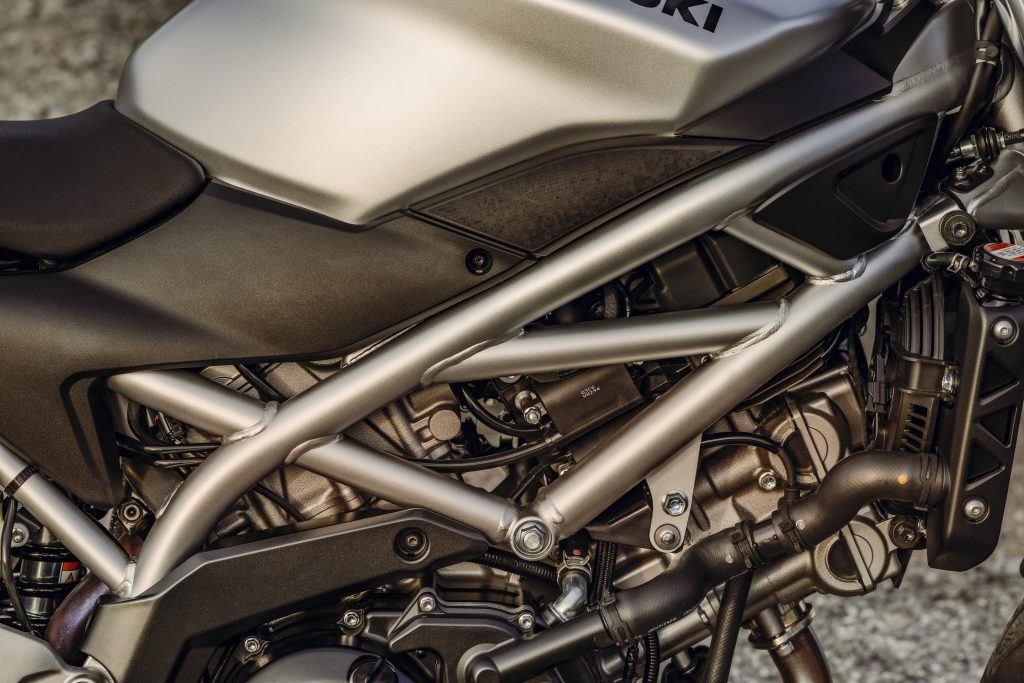
The proven steel trellis frame remains, which provides a slim profile and optimal weight balance, and enables a low seat height for a variety of riders. Updated tapered aluminium handlebars are wider than the previous SV650 for greater leverage when steering and a more comfortable, natural riding position.
Seat height is a class-leading 785mm, ensuring it is easy for riders of different heights to confidently place their feet on the floor when stationary. A redesigned fuel tank retains the 14-litre capacity, but saves weight and makes room for the components needed for the SV-7S’ new electronic systems.
Suspension settings have been revised on the 7S; with a focus on comfort, there is still enough control for sporty rides, something that earned the SV650 widespread acclaim. Tyres are Dunlop Roadsmart 3s.
Electronics
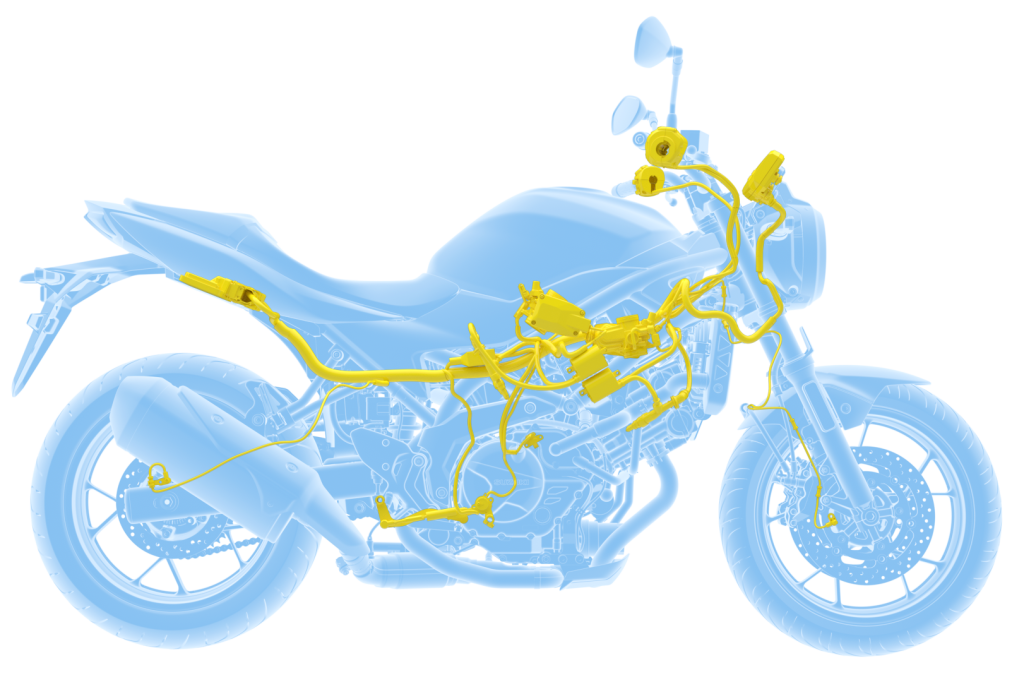
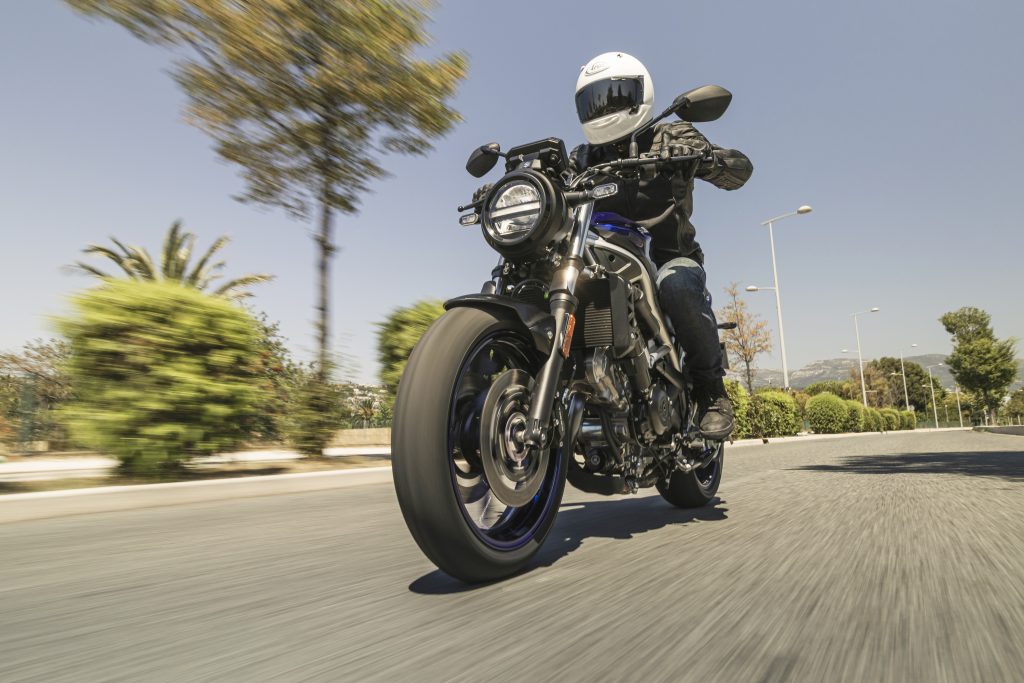
Like the 7GX, the 7S boasts a new suite of electronics whilst keeping it grounded as an affordable middleweight street bike. A new loom and ride-by-wire throttle enables three selectable power modes. Modes A and B both reach the same peak power, with mode B featuring a softer power curve. Mode C softens both initial throttle input and reaches 61PS peak power.
There are also three traction control modes and a bi-directional quickshifter as standard, plus easy-start and low RPM assist.
A colour TFT screen presents all the information to the rider, and smartphone connectivity enables a turn-by-turn navigation display in an easy-to-read format, plus weather and other incoming notifications.
Styling
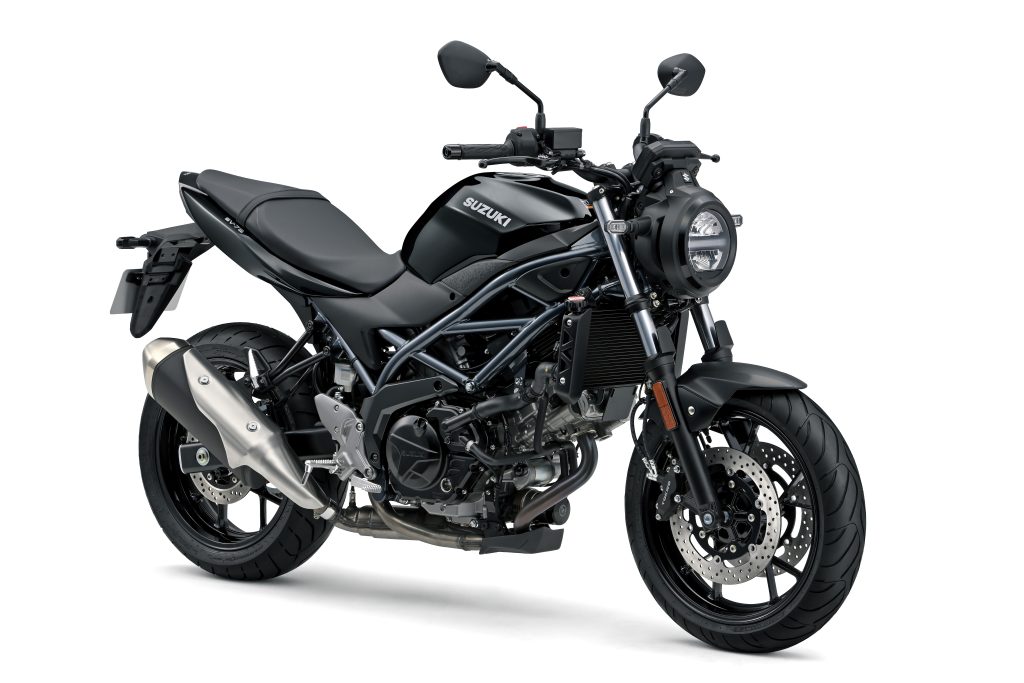
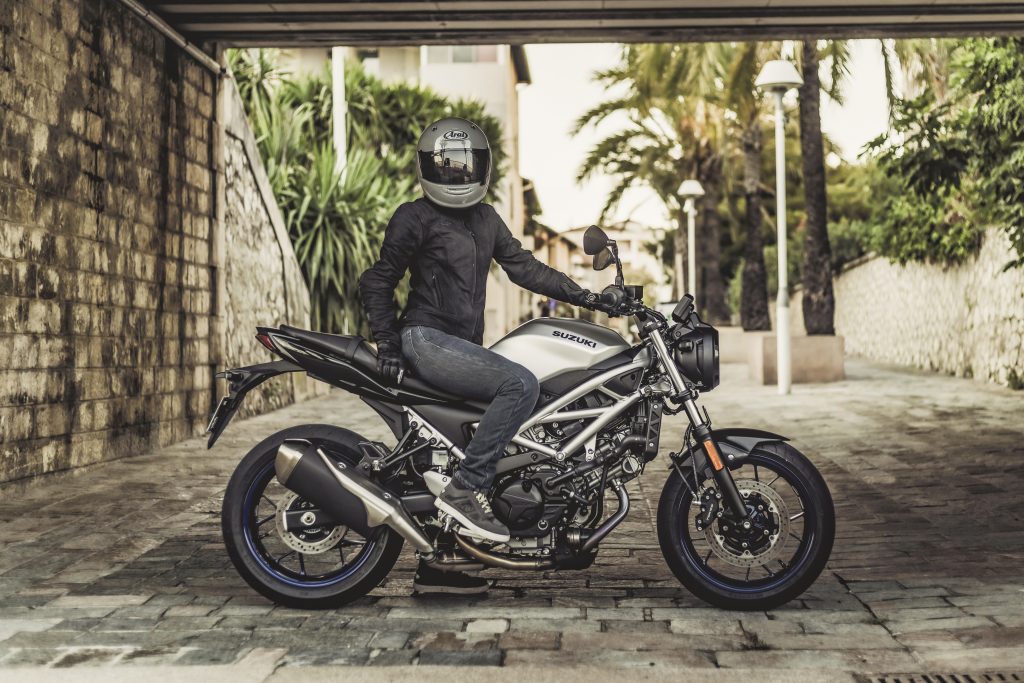
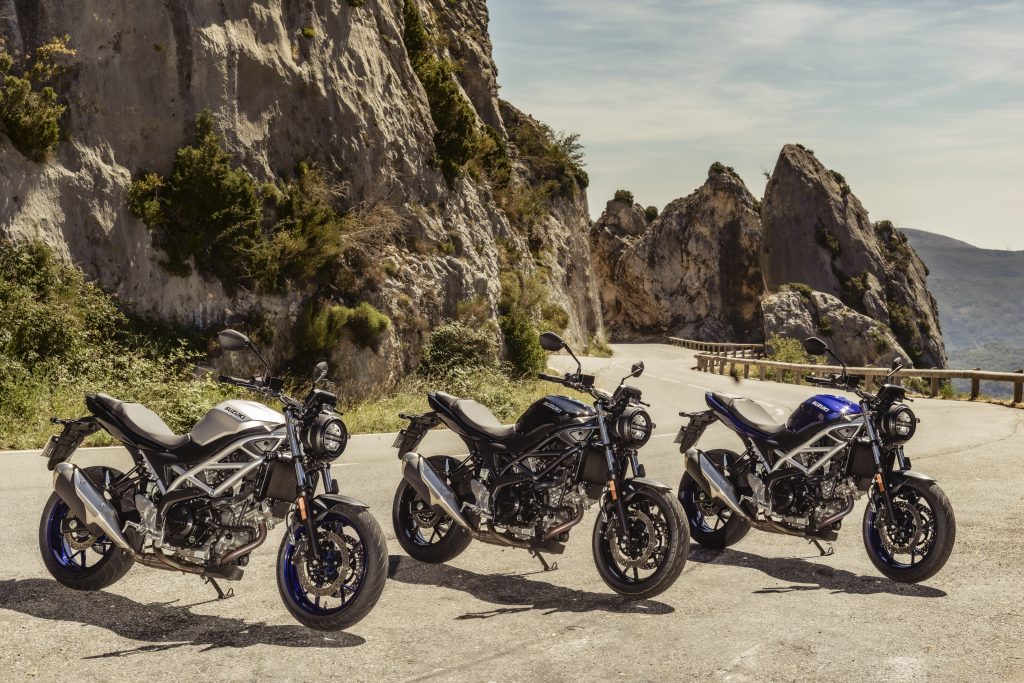
Classic SV styling evolves with the 7S. The re-shaped tank sits behind a new, round LED headlight and LED indicators. A slim seat unit completes the naked street bike look.
Built on a Matt Sword Silver frame is a Pearl Suzuki Deep Blue version and a Matt Sword Silver and Glass Sparkle Black iteration. Both use the same Pearl Suzuki Deep Blue wheels. A Glass Sparkle Black version, with colour-coded wheels, uses a grey frame.
The SV-7S will be available in authorised Suzuki dealerships in spring, 2027.
For the full press kit and more images, including technical imagery, click here.